Frozen Embryo Transfer, commonly called FET, is an important part of modern IVF treatment. It allows a previously created and frozen embryo to be thawed and transferred into the uterus during a later treatment cycle.
Unlike a fresh embryo transfer, Frozen Embryo Transfer does not require another egg retrieval or ovarian stimulation cycle, which can make the treatment less invasive and, in many cases, less expensive than starting IVF from the beginning.
Frozen Embryo Transfer has become increasingly common in fertility treatment. CDC data show that U.S. fertility clinics performed a large and growing number of cycles involving frozen patient eggs or embryos, with 172,914 such cycles reported in 2022.
For people considering FET, the most common questions are about Frozen Embryo Transfer cost, the procedure itself, success rates, medications, recovery time, pregnancy testing and the factors that influence the chance of a successful pregnancy.
This guide explains each part of the process in clear terms and provides practical information for patients preparing for treatment.
What Is a Frozen Embryo Transfer?
Frozen Embryo Transfer is an assisted reproductive technology procedure in which an embryo that was previously cryopreserved is thawed and transferred into the uterus. The embryo may have been created during an earlier IVF cycle, tested for genetic abnormalities, or stored for future family-building.
The American Society for Reproductive Medicine defines a frozen-thawed embryo transfer cycle as an ART procedure in which cycle monitoring is performed with the intention of transferring one or more frozen-thawed embryos.
Frozen Embryo Transfer is different from a fresh embryo transfer because the embryo is not transferred shortly after egg retrieval. Instead, the embryo is stored in a fertility laboratory until the patient is ready for transfer.
This approach can give the fertility team more flexibility. The uterine lining can be prepared separately from the original IVF stimulation cycle, and embryos can be transferred at a later date when the medical team believes the timing is appropriate.
Why Do Doctors Recommend Frozen Embryo Transfer?
Frozen Embryo Transfer may be recommended for several reasons. One common reason is that a patient has embryos remaining after an earlier IVF cycle. Instead of creating new embryos, those embryos can potentially be thawed and transferred later.
Frozen Embryo Transfer can also be useful when embryos need to undergo preimplantation genetic testing. In that situation, embryos may be frozen while the laboratory completes the testing process.
Another reason for choosing Frozen Embryo Transfer is that the fertility specialist may want to separate ovarian stimulation from embryo transfer. According to the Society for Assisted Reproductive Technology, a frozen transfer may be considered when factors during an IVF stimulation cycle could make an immediate fresh transfer less appropriate.
Some patients also choose Frozen Embryo Transfer after a previous pregnancy, miscarriage or unsuccessful fresh transfer when additional embryos remain available.
Frozen Embryo Transfer Cost in the USA
Frozen Embryo Transfer cost varies considerably across the United States. There is no single national price because fertility clinics use different pricing structures, and the total cost depends on medications, monitoring, laboratory services, insurance coverage and whether additional procedures are required.
As a general planning figure, patients may encounter Frozen Embryo Transfer costs of approximately $3,000 to $6,000 or more for the transfer cycle itself. This is only a broad planning range, and the actual price can be lower or higher depending on the fertility centre and treatment protocol.
For example, the University of Rochester's Strong Fertility Center currently lists a single Frozen Embryo Transfer cycle at $3,500. Its listed package includes office visits, up to four ultrasounds, embryo thawing, embryo culture, preparation and the transfer procedure, but embryo storage is not included.
This example shows why patients should not compare clinics using the advertised transfer price alone. Frozen Embryo Transfer cost can include several separate components.
What Can Be Included in Frozen Embryo Transfer Cost?
Frozen Embryo Transfer cost may include:
- Fertility clinic consultation
- Ultrasound monitoring
- Blood tests
- Endometrial lining assessment
- Estrogen medication
- Progesterone medication
- Embryo thawing or warming
- Embryology laboratory services
- Embryo preparation
- Embryo transfer procedure
- Pregnancy blood test
However, not every clinic includes all of these services in its advertised price.
Additional expenses may include embryo storage, genetic testing, specialised laboratory procedures, additional monitoring, medication and treatment for an underlying uterine condition.
The American Society for Reproductive Medicine advises patients to ask fertility programmes specifically about the cost of embryo freezing, storage and transfer, as well as medication and other treatment-related expenses.
Frozen Embryo Transfer Cost With Insurance
Insurance can significantly change the amount a patient pays for Frozen Embryo Transfer. Some insurance plans cover fertility treatment, while others cover only infertility testing or certain medications.
Before beginning treatment, ask your insurance provider whether your plan covers:
- Frozen Embryo Transfer
- Fertility medications
- Ultrasound monitoring
- Blood tests
- Embryo thawing
- Embryo storage
- Genetic testing
- IVF treatment
- Pregnancy-related care
Even when fertility treatment is covered, deductibles, copayments, coinsurance and annual or lifetime limits may apply.
Patients should also ask the fertility clinic whether it accepts their insurance and whether the clinic can provide a pre-treatment estimate. Comparing the expected insurance payment with the clinic's self-pay price can make the financial planning process easier.
How Does Frozen Embryo Transfer Work?
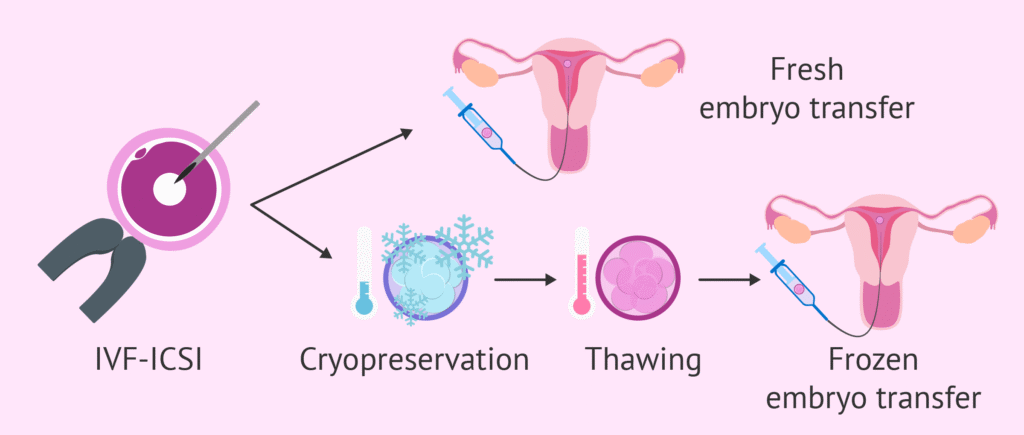
Frozen Embryo Transfer usually involves several stages. The exact protocol depends on the patient's menstrual cycle, medical history, embryo characteristics and fertility specialist's recommendations.
There are two common approaches: a medicated or hormone-replacement cycle and a natural or modified-natural cycle.
Step 1: Initial Evaluation
Before Frozen Embryo Transfer, the fertility team evaluates the uterus and overall reproductive health. Ultrasound and blood testing may be used to determine whether the uterus is ready for treatment.
The doctor may also review the embryos available for transfer, including their developmental stage, quality and whether genetic testing was performed.
Step 2: Preparing the Uterine Lining
The uterus needs a suitable endometrial lining before an embryo can be transferred.
In a medicated Frozen Embryo Transfer cycle, estrogen may be used to help the uterine lining develop. The patient may take estrogen as a tablet, patch or another prescribed form.
The fertility clinic monitors the lining using ultrasound and sometimes blood tests.
According to ReproductiveFacts.org, hormone preparation for frozen embryo transfer may include estrogen followed by progesterone to prepare the endometrium for implantation.
Step 3: Starting Progesterone
Progesterone plays an important role in preparing the endometrium for embryo implantation.
The timing of progesterone is carefully coordinated with the developmental stage of the embryo. This means the fertility clinic must schedule the embryo transfer at the appropriate point in the treatment cycle.
Patients should take prescribed medication exactly as instructed because timing can be an important part of the Frozen Embryo Transfer protocol.
Step 4: Embryo Thawing
On or around the day of transfer, the embryology laboratory removes the selected embryo from cryogenic storage and warms it under controlled laboratory conditions.
Modern cryopreservation methods have made embryo warming highly effective. Mayo Clinic notes that most embryos survive the freezing and thawing process.
The embryologist evaluates the embryo after warming to determine whether it has survived and is suitable for transfer.
Step 5: Embryo Transfer
The actual Frozen Embryo Transfer procedure is usually short and does not normally require surgery or general anaesthesia.
A thin, flexible catheter is passed through the cervix into the uterus. The embryo is then released into the uterine cavity.
The procedure is generally performed in a fertility clinic or doctor's office. Mayo Clinic describes embryo transfer as a procedure using a thin catheter through the vagina and cervix into the uterus. Mild cramping can occur, but the procedure is often painless.
Step 6: Pregnancy Test
After Frozen Embryo Transfer, the patient usually waits approximately 9 to 14 days before having a blood pregnancy test, depending on the clinic's protocol.
A blood test measures human chorionic gonadotropin, or hCG, which can indicate whether implantation and early pregnancy have occurred.
Patients should continue prescribed medications until the fertility clinic tells them to stop. If the pregnancy test is positive, additional blood tests and an ultrasound may be scheduled.
Natural vs Medicated Frozen Embryo Transfer
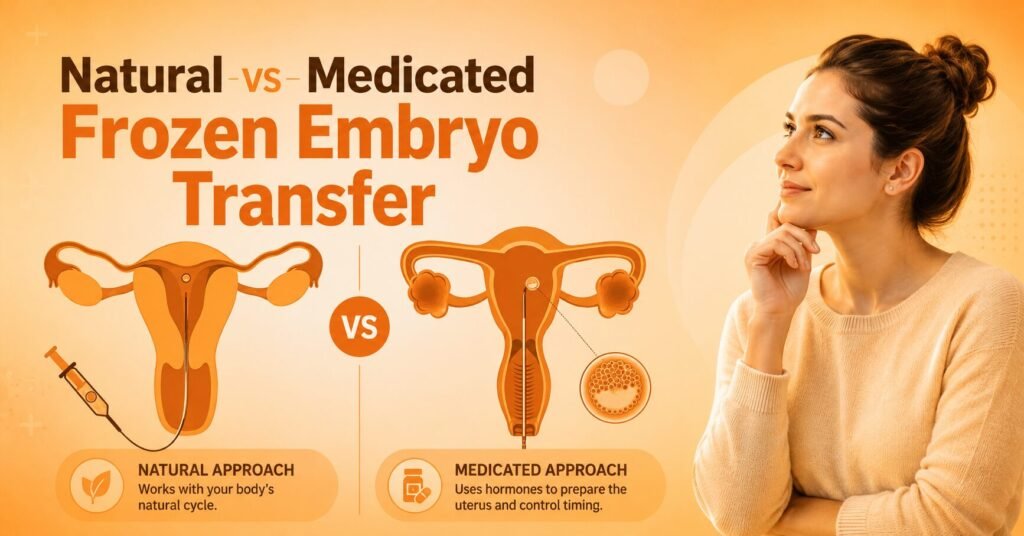
Frozen Embryo Transfer can be performed using different cycle preparation methods.
Natural Cycle FET
A natural Frozen Embryo Transfer cycle uses the patient's natural menstrual cycle and ovulation. The fertility team monitors follicular development and hormone changes to determine the appropriate transfer date.
This approach may be suitable for patients who ovulate regularly.
Medicated Cycle FET
A medicated Frozen Embryo Transfer cycle uses hormones to prepare the uterine lining and control the timing of transfer.
This approach can be useful for patients who do not ovulate regularly or when the fertility team wants more control over cycle timing.
Neither approach is automatically better for every patient. The appropriate method depends on individual medical circumstances and the fertility specialist's recommendations.
Frozen Embryo Transfer Success Rates
Frozen Embryo Transfer success rates vary substantially between patients and fertility clinics. Age, embryo quality, egg source, embryo development stage, genetic status, uterine health and previous fertility history can all influence outcomes.
It is important to understand that there is no single Frozen Embryo Transfer success rate that applies to everyone.
CDC data provide national ART statistics, but the agency specifically warns that average ART success rates may not represent an individual's actual chances. Outcomes can vary based on age, infertility diagnosis, previous pregnancy and the ART procedures used.
In the CDC's 2022 national ART summary, 37.5% of ART cycles resulted in a live-birth delivery overall. The data include fresh and frozen eggs or embryos from patients and donors, so this figure should not be interpreted as a specific Frozen Embryo Transfer success rate.
For a more meaningful estimate, patients should ask their fertility clinic for live-birth rates for patients with a similar age, embryo source and treatment history.
Factors That Affect Frozen Embryo Transfer Success
Age at Egg Retrieval
The age at which the eggs were collected can be important, particularly for embryos created using the patient's own eggs.
The genetic and developmental potential of embryos is strongly associated with the age of the person who produced the eggs.
Embryo Quality
Embryos are assessed by embryologists based on characteristics such as development and appearance.
A high-quality blastocyst may have a better expected outcome than an embryo with poorer developmental characteristics, although embryo grading cannot guarantee pregnancy.
Genetic Testing
Some embryos undergo preimplantation genetic testing. A genetically tested embryo may provide additional information to the medical team, but genetic testing does not guarantee implantation or a live birth.
Uterine Health
The condition of the uterus and endometrial lining is another important factor. Conditions such as certain polyps, fibroids, adhesions or other uterine problems may affect treatment planning.
Embryo Development Stage
Blastocyst-stage embryos are commonly used for embryo transfer. The fertility team determines which embryo is appropriate based on the patient's treatment plan.
Number of Embryos Transferred
Transferring more than one embryo increases the possibility of multiple pregnancy.
The American Society for Reproductive Medicine notes that single-embryo transfer can substantially reduce the risk of twins and other multiple pregnancies while allowing additional frozen embryos to be transferred in later cycles when available.
Frozen Embryo Transfer Recovery
Frozen Embryo Transfer recovery is generally quick because the procedure does not involve egg retrieval or abdominal surgery.
Many patients return to normal daily activities shortly after the transfer. Some may experience mild cramping, bloating, breast tenderness or light spotting.
Mayo Clinic notes that people can generally return to their usual daily routine after embryo transfer, although individual instructions may differ, particularly regarding vigorous exercise and sexual activity.
A patient should follow the specific instructions provided by the fertility clinic.
What Should You Avoid After Frozen Embryo Transfer?
There is no need for prolonged bed rest after a routine embryo transfer. ASRM guidance supports immediate ambulation after embryo transfer rather than requiring patients to remain inactive.
However, patients should follow their fertility specialist's advice regarding strenuous exercise, medications, sexual activity and other activities.
Normal light activity is generally compatible with recovery, but each patient's situation can be different.
Symptoms After Frozen Embryo Transfer
Some symptoms after Frozen Embryo Transfer can be caused by medications rather than pregnancy.
Possible symptoms include:
- Mild pelvic cramping
- Breast tenderness
- Bloating
- Fatigue
- Light spotting
- Changes in vaginal discharge
These symptoms do not reliably confirm pregnancy.
A pregnancy test is the appropriate way to determine whether implantation has occurred.
If you experience significant pain, heavy vaginal bleeding, fainting, severe abdominal swelling or other concerning symptoms, contact your fertility clinic or seek medical care promptly. Mayo Clinic recommends contacting the care team for moderate or severe pain or heavy bleeding following embryo transfer.
Frozen Embryo Transfer vs Fresh Embryo Transfer
Frozen Embryo Transfer and fresh embryo transfer are both used in IVF, but they follow different timelines.
With a fresh transfer, the embryo is transferred during the same general IVF treatment cycle in which the eggs are retrieved.
With Frozen Embryo Transfer, embryos have already been created and frozen. The transfer occurs later after the uterine lining has been prepared.
Frozen Embryo Transfer can offer several practical advantages. It avoids another ovarian stimulation and egg retrieval when suitable embryos are already available. It also allows the fertility team to separate embryo creation from the transfer cycle.
SART notes that frozen transfers have become very common and that the choice between fresh and frozen transfer depends on factors such as ovarian response, hormone levels, embryo testing and uterine conditions.
How Long Does Frozen Embryo Transfer Take?
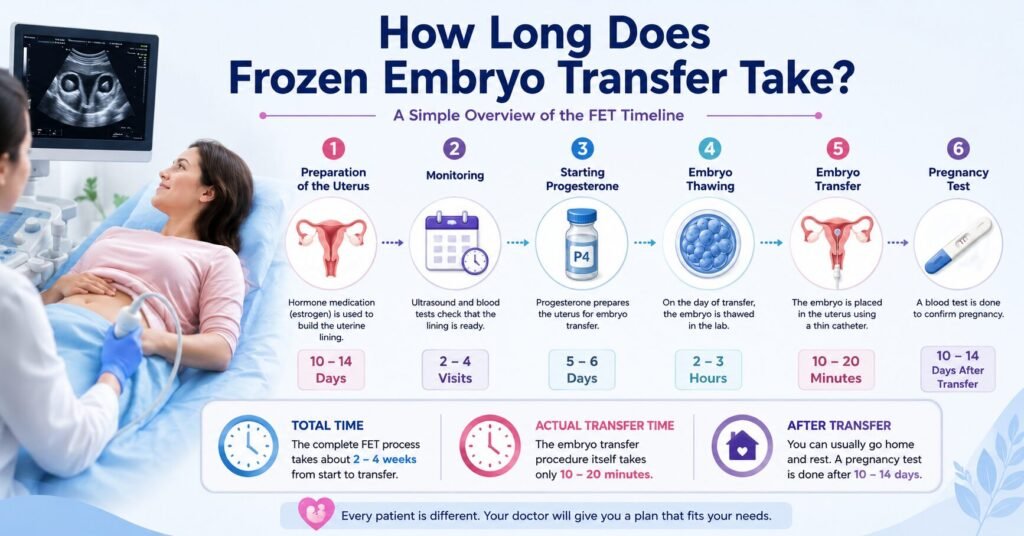
The complete Frozen Embryo Transfer process can take several weeks depending on the type of cycle.
A medicated cycle may involve several weeks of estrogen preparation followed by progesterone and the scheduled transfer.
A natural-cycle FET may depend on the timing of ovulation and therefore requires monitoring.
The actual embryo transfer itself usually takes only a short time.
The pregnancy test is generally performed around two weeks after the transfer, although exact timing varies by fertility clinic.
Is Frozen Embryo Transfer Painful?
Frozen Embryo Transfer is usually considered a minimally invasive procedure. Most patients do not need anaesthesia.
The catheter is passed through the cervix and into the uterus, and some patients experience mild pressure or cramping.
The level of discomfort varies between individuals. If a patient has a difficult cervical passage or other anatomical factors, the doctor may discuss ways to make the procedure more comfortable.
How Long Does the Embryo Take to Implant?
Implantation timing depends partly on the developmental stage of the embryo at transfer.
The embryo must interact with the uterine lining during a receptive period known as the implantation window.
This is one reason why the timing of estrogen, progesterone and embryo transfer is carefully coordinated.
A patient should not interpret symptoms immediately after Frozen Embryo Transfer as proof that implantation has occurred. Implantation is a biological process that cannot be confirmed based on sensations alone.
Frozen Embryo Transfer and Lifestyle
After Frozen Embryo Transfer, patients often wonder whether they need to completely change their lifestyle.
In most cases, the focus should be on following medical instructions, taking prescribed medications correctly, eating a balanced diet, getting adequate sleep and avoiding activities specifically restricted by the fertility team.
There is no proven method that can guarantee implantation after transfer.
Patients should also be careful about online claims involving special foods, supplements or post-transfer routines. Always discuss supplements and medications with your fertility specialist before using them during treatment.
How to Prepare for Frozen Embryo Transfer
Good preparation can make the treatment process easier.
Before starting Frozen Embryo Transfer, ask your fertility clinic about:
- The type of FET cycle being used
- Medication schedule
- Ultrasound monitoring
- Blood testing
- Embryo selection
- Embryo warming procedures
- Transfer timing
- Number of embryos recommended
- Frozen Embryo Transfer cost
- Embryo storage fees
- Insurance coverage
- Pregnancy testing date
- What activities are permitted after transfer
Keep a written medication schedule if several medicines are involved. Hormone timing can be an important part of the treatment cycle.
Questions to Ask Your Fertility Clinic
Before committing to Frozen Embryo Transfer, patients can ask:
- How much does Frozen Embryo Transfer cost at your clinic?
- Does the price include embryo thawing?
- Are ultrasounds included?
- Are blood tests included?
- Are medications included?
- What are the embryo storage fees?
- Is genetic testing included?
- What is your live-birth rate for patients in my age group?
- What is the clinic's success rate for frozen embryo transfers?
- How many embryos do you recommend transferring?
- What happens if the embryo does not survive thawing?
- When should I take my pregnancy test?
- What symptoms should prompt me to contact the clinic?
- What activities should I avoid after the transfer?
Getting clear answers can help you understand both the medical process and the financial commitment.
Must Read:
- IVF Treatment Cost in the USA: What You Need to Know in 2026
- Top 5 Best Iron Supplement For Pregnancy
- Top 5 Best Beef Organ Supplement For Women
FAQs:
What is Frozen Embryo Transfer?
Frozen Embryo Transfer is a fertility procedure in which an embryo that was previously frozen is thawed and transferred into the uterus during a later treatment cycle.
How much does Frozen Embryo Transfer cost?
Frozen Embryo Transfer cost varies by location and clinic. A broad U.S. planning range is around $3,000 to $6,000 or more for the transfer cycle itself, although some clinics charge less or more. Additional medication, monitoring, storage and laboratory expenses may apply. One U.S. fertility centre currently lists a single FET cycle at $3,500 with several services included.
Is Frozen Embryo Transfer cheaper than IVF?
Frozen Embryo Transfer is generally less expensive than starting a complete IVF cycle because it does not normally require ovarian stimulation or egg retrieval. Existing embryos are used instead.
What is the success rate of Frozen Embryo Transfer?
There is no single success rate for every patient. Success depends on age at egg retrieval, embryo quality, genetic status, uterine health and other factors. CDC recommends using clinic-specific data and discussing individual circumstances with a fertility specialist.
How long after Frozen Embryo Transfer can I take a pregnancy test?
Many fertility clinics perform a blood pregnancy test approximately 9 to 14 days after transfer. Your clinic will provide the exact testing date.
Can I work after Frozen Embryo Transfer?
Many patients can return to normal daily activities after the procedure. However, follow your fertility clinic's specific instructions about exercise, sexual activity and other activities.
Final Thoughts:
Frozen Embryo Transfer has become an important part of modern fertility care because it allows patients to use embryos created during a previous IVF cycle without repeating ovarian stimulation and egg retrieval.
The procedure itself is usually short and minimally invasive, but the complete treatment involves careful preparation of the uterine lining, medication timing, embryo warming, transfer and follow-up pregnancy testing.
Frozen Embryo Transfer cost in the United States varies widely, but patients can often expect several thousand dollars for the transfer cycle itself. The final bill may include medications, ultrasound monitoring, blood tests, embryo warming, laboratory services and storage fees. Because pricing differs between fertility clinics, getting a detailed written estimate is one of the best ways to avoid unexpected expenses.
Success rates also vary considerably. Age, embryo quality, genetic status, uterine health and the patient's reproductive history can all influence the outcome. CDC data show that ART outcomes differ by patient characteristics and treatment type, so national averages should not be treated as an individual's personal probability of success.
Recovery after Frozen Embryo Transfer is generally quick. Many patients return to their usual activities soon after the procedure, while continuing prescribed medications and following their clinic's instructions.
If you are considering Frozen Embryo Transfer, discuss the procedure, expected success rate, medication plan, risks and total treatment cost with a qualified fertility specialist. A personalised treatment plan is more useful than relying on a general success rate or advertised price.
Medical disclaimer: This article is intended for general educational purposes and does not replace medical advice, diagnosis or treatment from a qualified fertility specialist. Frozen Embryo Transfer costs, procedures, medication requirements and success rates vary between patients and clinics. Always confirm current prices and treatment recommendations directly with your fertility clinic and insurance provider.