-
Provides 50mg zinc per caplet
-
Supports immune system function
-
Promotes healthy skin and antioxidant protection
-
Contains 250 gluten-free vegetarian caplets
-
Provides 50mg zinc picolinate per capsule
-
Contains 240 vegetarian capsules per bottle
-
Gluten-free formula for daily supplementation
-
Made without genetically modified ingredients
-
Provides 30mg zinc picolinate per capsule
-
Supports immune system health and function
-
Promotes healthy skin, eyes, and nerves
-
NSF Certified for product contents
-
Provides 30mg zinc per serving
-
Includes copper, selenium, and biotin
-
Supports hair, skin, and nail health
-
Made in USA NSF-GMP facility
-
Combines zinc with quercetin bioflavonoids
-
Contains 120 vegetarian capsules per bottle
-
Designed to support immune system health
-
Third-party tested for product quality
Top 5 Best Zinc Supplements
The best zinc supplements can help support immune function, healthy skin, and normal cellular processes. Available in forms such as zinc picolinate and zinc caplets, these products offer different dosages and formulations. Choosing a quality supplement depends on your nutritional needs, ingredient preferences, and healthcare professional’s guidance for safe, appropriate use.
1. Nature's Bounty
Nature’s Bounty Zinc is designed to support daily nutritional needs, including immune function and skin health. Its zinc caplets provide a convenient option for people looking to supplement their diets. The brand offers a straightforward formula, making it suitable for adults who want an easy addition to their daily wellness routine.
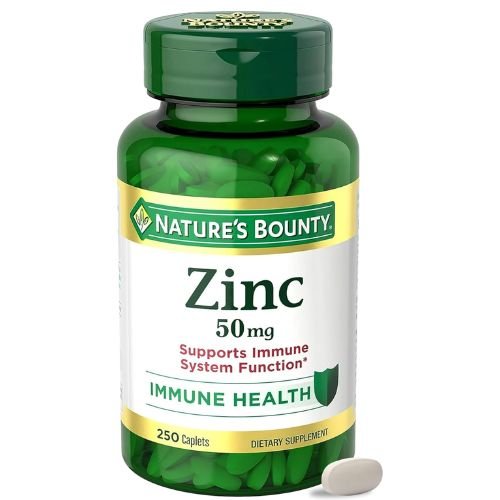
Nature’s Bounty Zinc 50mg Caplets provide zinc to support normal immune function and overall nutritional health. Each unflavored caplet contains 50 mg of zinc, and the bottle includes 250 vegetarian caplets. The gluten-free formula contains no sugar, artificial flavors, or artificial sweeteners, making it a convenient option for daily supplementation.
Key Benefits
- Provides 50mg zinc per caplet
- Supports normal immune system function
- Helps maintain healthy skin
- Offers antioxidant support for wellness
- Contains 250 vegetarian caplets per bottle
Product Overview
| Feature | Details |
|---|---|
| Brand | Nature’s Bounty |
| Supplement Type | Zinc |
| Strength | 50 mg |
| Form | Caplets |
| Quantity | 250 caplets |
| Flavor | Unflavored |
| Dietary Features | Gluten-free, sugar-free, vegetarian |
Why Choose Nature’s Bounty Zinc?
This supplement offers a simple way to add zinc to your nutritional routine. Its large bottle contains 250 caplets, while the formula avoids artificial flavors and sweeteners. However, each caplet provides a high dose of zinc, so it is important to consider your total daily intake from food and other supplements.
Safety Note: The adult tolerable upper intake level for zinc is 40 mg per day from all sources. A 50 mg supplement exceeds this limit and may cause adverse effects if used regularly. Consult a healthcare professional before taking it long term, as excessive zinc can contribute to copper deficiency and other health problems.
2. Nutricost
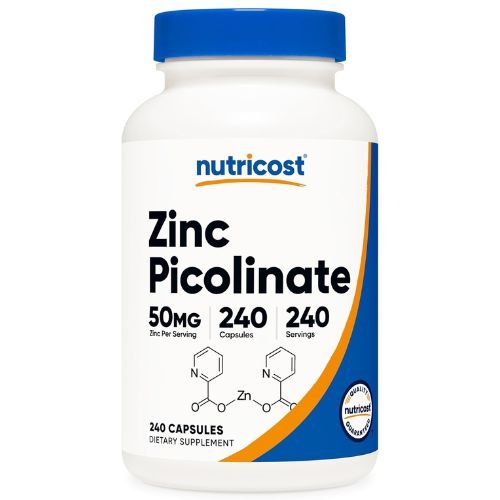
Nutricost Zinc Picolinate provides 50 mg of zinc per capsule in a vegetarian, gluten-free formula. The bottle contains 240 capsules, offering a convenient supply for regular supplementation. Zinc picolinate is a commonly used form of zinc. Check the dosage carefully, as 50 mg exceeds the adult daily upper limit for routine intake.
Nutricost Zinc Picolinate 50mg provides zinc in picolinate form to support normal immune function and overall nutritional health. Each serving contains 50 mg of zinc, and the bottle includes 240 vegetarian capsules. The formula is gluten-free, GMO-free, and manufactured in an NSF-certified, GMP-compliant, FDA-registered facility.
Key Benefits
- Provides 50mg zinc per serving
- Uses zinc picolinate as its source
- Contains 240 vegetarian capsules per bottle
- Made without genetically modified ingredients
- Gluten-free formula for daily supplementation
Product Overview
| Feature | Details |
|---|---|
| Brand | Nutricost |
| Supplement Type | Zinc |
| Zinc Form | Zinc Picolinate |
| Strength | 50 mg per serving |
| Item Form | Capsule |
| Quantity | 240 capsules |
| Flavor | Unflavored |
| Dietary Features | Vegetarian, gluten-free, GMO-free |
Why Choose Nutricost Zinc Picolinate?
Nutricost offers a high-potency zinc supplement in a vegetarian capsule format. Zinc picolinate is one form used in dietary supplements, while the 240-serving bottle provides a substantial supply. Its manufacturing information and straightforward ingredient focus may appeal to adults comparing zinc products.
Safety Note: A 50 mg zinc serving exceeds the adult tolerable upper intake level of 40 mg per day from all sources. Long-term high intake can cause nausea and interfere with copper absorption. Consult a healthcare professional before regular use, particularly if you take other supplements or medications.
3. THORNE
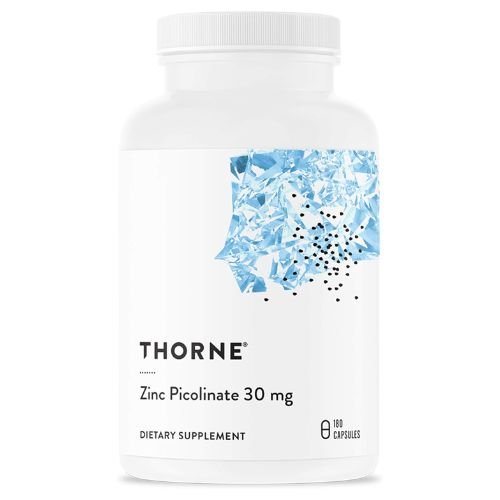
THORNE Zinc Picolinate delivers 30 mg of zinc per capsule to support nutritional needs. The formula is intended to help maintain normal immune function and overall health. Its 180-capsule bottle provides a long-lasting supply. The product also carries NSF Contents Certified status, offering additional assurance about its listed product contents.
THORNE Zinc Picolinate 30 mg is a trace mineral supplement formulated to support normal immune function and overall nutritional health. Each capsule contains 30 mg of zinc picolinate, a commonly used form of zinc. The product comes in a bottle of 180 capsules and carries NSF Contents Certified status for added quality assurance.
Key Benefits
- Provides 30mg zinc picolinate per capsule
- Supports normal immune system function
- Helps maintain healthy skin and eyes
- Supports normal reproductive health and function
- NSF Contents Certified for product quality
Product Overview
| Feature | Details |
|---|---|
| Brand | THORNE |
| Supplement Type | Zinc |
| Zinc Form | Zinc Picolinate |
| Strength | 30 mg per capsule |
| Item Form | Capsule |
| Quantity | 180 capsules |
| Product Benefits | Immune support and foundational health |
| Certification | NSF Contents Certified |
Why Choose THORNE Zinc Picolinate?
THORNE provides zinc in picolinate form in a convenient capsule format. Its 30 mg dose is lower than some 50 mg zinc supplements, although it is still relatively high compared with typical daily nutritional requirements. The NSF Contents Certified designation offers additional assurance about product contents and testing.
Safety Note: The adult tolerable upper intake level for zinc is 40 mg daily from all sources. Consider zinc from food and other supplements when assessing your total intake. Regular high-dose use may cause nausea or copper deficiency. Consult a healthcare professional before long-term use, especially if you take medications or other mineral supplements.
4. SANDHUHERBALS
SANDHUHERBALS offers a zinc supplement option for adults seeking to add this essential mineral to their daily nutrition routine. Zinc plays a role in immune function, cell growth, and normal wound healing. Before choosing this product, review its zinc form, serving size, ingredient list, and quality information to determine whether it suits your needs.
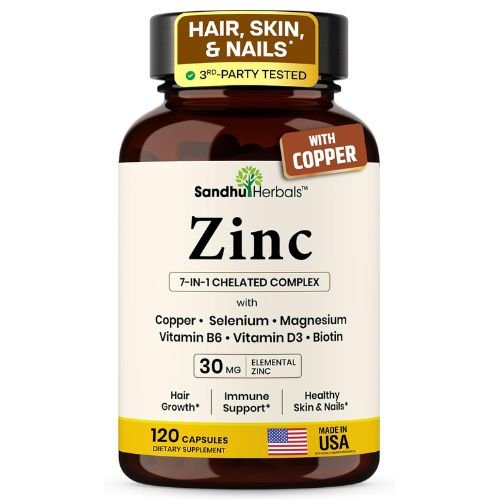
SANDHUHERBALS Zinc 30mg is a multi-nutrient supplement formulated to support daily nutritional needs, immune function, and hair, skin, and nail health. Each capsule contains 30 mg of chelated zinc alongside copper, selenium, vitamin D3, magnesium, biotin, and vitamin B6. The bottle contains 120 capsules and is marketed as manufactured in a GMP-certified facility.
Key Benefits
- Provides 30mg chelated zinc per capsule
- Includes copper, selenium, and biotin
- Supports normal immune system function
- Helps maintain healthy hair, skin, and nails
- Combines seven nutrients in one formula
Product Overview
| Feature | Details |
|---|---|
| Brand | SANDHUHERBALS |
| Supplement Type | Zinc complex |
| Zinc Strength | 30 mg |
| Item Form | Capsule |
| Quantity | 120 capsules |
| Additional Ingredients | Copper, selenium, vitamin D3, magnesium, biotin, vitamin B6 |
| Intended Benefits | Immune, hair, skin, and nail support |
| Manufacturing Claim | GMP-certified facility |
Why Choose SANDHUHERBALS Zinc Complex?
This supplement combines zinc with several complementary vitamins and minerals in one formula. It may appeal to adults who prefer a multi-nutrient product rather than taking separate supplements. The inclusion of copper is also relevant because prolonged high zinc intake can interfere with copper absorption.
Safety Note
The 30 mg zinc dose is relatively high compared with typical daily requirements. When combined with zinc from food or other supplements, total intake may approach or exceed the adult upper limit of 40 mg per day. Review the full ingredient amounts and consult a healthcare professional before regular use, especially if you take other supplements or medications.
5. Sandhu's
Sandhu’s Zinc Supplement may be an option for people looking to support their daily mineral intake. Zinc is essential for normal immune function, DNA synthesis, and healthy skin. Product details can vary, so check the label for the amount of elemental zinc, additional ingredients, recommended serving, and relevant quality certifications before purchasing.
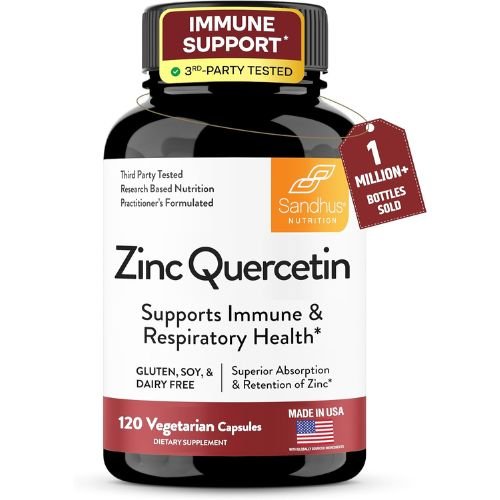
Sandhu’s Zinc Quercetin Supplement combines zinc with quercetin, a plant-based flavonoid, to support daily nutritional needs and normal immune function. The product contains 120 vegetarian capsules and is marketed as third-party tested and manufactured in an NSF-GMP-certified facility in the USA. Its gluten-free, soy-free, and dairy-free formula may suit adults seeking a combined supplement.
Key Benefits
- Combines zinc with quercetin flavonoids
- Supports normal immune system function
- Provides antioxidant support through quercetin
- Contains 120 vegetarian capsules per bottle
- Gluten-free, soy-free, and dairy-free formula
Product Overview
| Feature | Details |
|---|---|
| Brand | Sandhu’s |
| Supplement Type | Zinc and quercetin |
| Item Form | Capsule |
| Quantity | 120 vegetarian capsules |
| Suggested Use | Two capsules daily, according to the product listing |
| Dietary Features | Vegetarian, gluten-free, soy-free, dairy-free |
| Quality Claims | Third-party tested; NSF-GMP facility stated by manufacturer |
Why Choose Sandhu’s Zinc Quercetin?
This supplement combines two ingredients in one product, offering a convenient option for adults who prefer not to take separate zinc and quercetin supplements. Zinc contributes to normal immune function and many enzymatic processes, while quercetin is a plant flavonoid with antioxidant properties. Individual results may vary, and evidence for specific combined benefits is still developing.
Safety Note
The exact amount of zinc and quercetin per serving is not provided in the supplied product details, so check the Supplement Facts label before use. Avoid combining it with other zinc supplements without calculating your total intake. Adults generally should not exceed 40 mg of zinc daily from all sources unless advised by a healthcare professional. Consult a healthcare professional if you take medication or have an ongoing health condition.
Zinc supplements are popular dietary supplements that help people meet their daily zinc requirements and support normal immune function, skin health, wound healing, and other essential body processes. Zinc is an essential trace mineral that the body needs in small amounts to maintain overall health. Although many foods contain zinc, some people may need additional zinc through supplements when their dietary intake is insufficient or a healthcare professional identifies a deficiency.
The best zinc supplements come in different forms, including zinc picolinate, zinc gluconate, zinc citrate, and zinc sulfate. These products also vary in dosage, capsule size, additional ingredients, and quality standards. Choosing the right supplement depends on your nutritional needs, current diet, age, and health circumstances.
In this guide, we explain the potential benefits of zinc supplements, common zinc forms, recommended daily intake, possible side effects, and important factors to consider before adding a zinc supplement to your wellness routine.
What Are Zinc Supplements?
Zinc supplements are dietary products that provide zinc in a concentrated form, usually as capsules, tablets, caplets, gummies, or liquid preparations. They are designed to help people meet their nutritional requirements when their usual diet does not provide enough zinc.
Zinc is involved in hundreds of enzymatic reactions and plays an important role in several physiological processes. The body uses this mineral for DNA synthesis, cell division, protein production, immune responses, and normal growth and development.
Unlike some nutrients, zinc is not stored in large amounts in the body. Regular dietary intake is therefore important for maintaining adequate zinc status.
Why Is Zinc Important for the Body?
Zinc contributes to several essential functions, including:
- Supporting normal immune system function.
- Helping the body produce proteins and DNA.
- Supporting normal wound healing.
- Maintaining healthy skin and cellular function.
- Contributing to normal taste and smell.
- Supporting growth and development.
- Helping maintain reproductive health.
- Supporting normal antioxidant defense mechanisms.
A balanced diet is the preferred way to obtain zinc. Supplements may be helpful for people who have difficulty meeting their needs through food alone, but taking more zinc does not automatically provide greater health benefits.
Health Benefits of Zinc Supplements
Zinc supplements can be beneficial when they address inadequate zinc intake or a diagnosed deficiency. The potential benefits depend on a person's nutritional status, supplement dosage, and overall health.
1. Supports Immune System Function
Zinc is essential for the development and normal activity of immune cells. Adequate zinc intake helps maintain the body's natural defenses and supports normal immune responses.
People with zinc deficiency may experience impaired immune function. Correcting a deficiency can help restore normal physiological processes.
Zinc is also found in some cold remedies. Certain zinc lozenges may shorten the duration of a common cold when started early, but results vary depending on the formulation, dosage, and timing. Evidence does not establish that every zinc supplement prevents colds or treats other infections.
2. Helps Maintain Healthy Skin
Zinc contributes to normal skin structure, cell growth, and tissue repair. It also plays a role in wound healing and helps maintain the skin's protective barrier.
People with zinc deficiency may experience skin changes or delayed wound healing. In such cases, correcting the deficiency can support recovery.
Zinc supplements are also marketed for acne and general skin health. However, results from acne studies are mixed, and supplements are not a guaranteed solution for breakouts. People with persistent acne should consider discussing evidence-based treatments with a dermatologist.
3. Supports Hair and Nail Health
Zinc is involved in cell division and protein synthesis, which are important for the growth and maintenance of hair and nails.
Low zinc levels may contribute to hair loss or changes in nail health. If a deficiency is responsible, appropriate supplementation may help address the underlying nutritional problem.
However, hair loss can result from many causes, including genetics, hormonal changes, thyroid conditions, stress, and inadequate iron intake. Taking zinc without identifying the cause may not improve hair growth.
Similarly, brittle nails are not always a sign of zinc deficiency. A healthcare professional can help determine whether testing or dietary changes are appropriate.
4. Supports Reproductive Health
Zinc plays a role in normal reproductive function in both men and women. It contributes to cell growth, DNA synthesis, and several processes involved in reproductive health.
In men, zinc is involved in normal sperm development and reproductive function. Maintaining adequate zinc intake is important, particularly when dietary intake is insufficient.
In women, zinc contributes to normal cell division and reproductive processes throughout different stages of life.
Nevertheless, zinc supplements are not proven fertility treatments for everyone. Taking high doses does not necessarily improve testosterone levels, fertility, or reproductive performance in people who already obtain sufficient zinc.
5. Contributes to Normal Antioxidant Protection
Zinc participates in antioxidant defense systems that help protect cells from oxidative damage. It also supports the activity of several proteins and enzymes involved in maintaining normal cellular function.
Although zinc is sometimes promoted as an antioxidant supplement, its benefits should not be confused with those of every antioxidant compound. Adequate zinc intake supports normal physiology, but excess supplementation can be harmful.
6. Supports Normal Taste and Smell
Zinc is involved in maintaining normal taste and smell. Inadequate zinc status can sometimes contribute to changes in these senses.
For individuals with a confirmed deficiency, correcting zinc intake may help improve related symptoms. However, changes in taste or smell can also result from infections, medications, neurological conditions, and other health issues.
Persistent or unexplained changes should be evaluated by a healthcare professional rather than treated with high-dose zinc alone.
Different Types of Zinc Supplements
Zinc supplements contain different zinc compounds. These forms vary in composition, elemental zinc content, and how they are formulated.
There is no single zinc form that is automatically best for everyone. Product quality, the amount of elemental zinc, tolerance, cost, and individual needs are all important considerations.
Zinc Picolinate
Zinc picolinate combines zinc with picolinic acid. It is a common ingredient in dietary supplements and is frequently marketed for its absorption characteristics.
Products containing zinc picolinate are available in several strengths, including 15 mg, 30 mg, and 50 mg. The appropriate amount depends on individual needs, and a higher-strength product is not necessarily better.
Zinc Gluconate
Zinc gluconate is another widely used form of zinc. It appears in tablets, capsules, lozenges, and other preparations.
Some zinc gluconate products are marketed for immune support, while lozenges may be formulated for use during a common cold. Research on cold symptoms depends on the specific product and method of administration.
Zinc Citrate
Zinc citrate combines zinc with citric acid and is used in many dietary supplements. It is available in tablets, capsules, and other forms.
This may be a practical choice for adults who want a conventional zinc supplement. As with other forms, the amount of elemental zinc is more important than simply comparing the compound's total weight.
Zinc Sulfate
Zinc sulfate is used in supplements and certain medical preparations. It can be an effective way to provide zinc when supplementation is needed.
Some people may experience gastrointestinal discomfort with particular zinc formulations. If a product causes nausea or stomach upset, a healthcare professional can help determine whether a different form or dosage would be appropriate.
Zinc Acetate
Zinc acetate is used in certain supplements and zinc lozenges. It has also been studied in products intended to help shorten the duration of common cold symptoms.
Evidence for cold-related benefits applies to particular formulations and usage patterns, not every product containing zinc acetate.
Zinc Oxide
Zinc oxide is used in some oral supplements and topical products. It is also a common ingredient in sunscreens and skin-protective preparations.
Oral zinc oxide supplements may differ in their absorption characteristics from some other zinc forms. Product selection should focus on nutritional requirements, elemental zinc content, and professional guidance rather than marketing claims alone.
How Much Zinc Do Adults Need Daily?
The recommended daily zinc intake varies by age, sex, life stage, and health circumstances. Most adults can meet their needs through a balanced diet.
The following table summarizes commonly used U.S. dietary recommendations for adults.
| Group | Recommended Daily Zinc Intake |
|---|---|
| Adult men | 11 mg |
| Adult women | 8 mg |
| Pregnant adults | 11 mg |
| Breastfeeding adults | 12 mg |
These amounts represent total daily zinc intake from food and supplements combined, not the recommended dose of a supplement for every person.
The adult tolerable upper intake level in the United States is generally 40 mg per day from all sources. This is a safety limit, not a target intake. Higher doses may sometimes be prescribed for specific medical reasons, but they should be used under appropriate professional supervision.
Is 50 mg of Zinc Too Much?
A 50 mg zinc supplement provides more zinc than the usual daily requirement for most adults and exceeds the adult upper intake level of 40 mg per day before counting zinc from food or other supplements.
Some products, including high-strength zinc picolinate and zinc caplets, contain 50 mg per serving. These products should not automatically be considered suitable for everyday long-term use.
Regularly taking too much zinc can cause nausea, vomiting, stomach discomfort, and reduced copper absorption. Prolonged excessive intake may contribute to copper deficiency, anemia, and neurological problems.
Before choosing a 50 mg zinc supplement, consult a qualified healthcare professional to determine whether that amount is appropriate for your circumstances.
Best Zinc Supplements: What Should You Look For?
Choosing a zinc supplement involves more than comparing brand names or capsule counts. The right product should match your nutritional needs and provide clear, reliable information about its ingredients.
1. Check the Elemental Zinc Amount
The Supplement Facts label should identify the amount of elemental zinc per serving. This is the amount of zinc supplied by the compound, rather than the total weight of the zinc compound itself.
For example, a label may list zinc picolinate as the source while stating a separate amount of elemental zinc. Always compare products using the stated elemental zinc amount.
2. Choose a Suitable Zinc Form
Common options include zinc picolinate, zinc gluconate, zinc citrate, and zinc sulfate.
The most appropriate form may depend on availability, cost, tolerance, and the reason for supplementation. Marketing phrases such as “maximum absorption” should not be the only basis for choosing a product.
3. Review Additional Ingredients
Some zinc supplements contain only zinc, while others combine it with copper, selenium, vitamin B6, vitamin D, or quercetin.
Combination formulas may be convenient, but they can make it harder to track the amount of each nutrient consumed daily. Review all ingredients carefully, especially if you already take a multivitamin or another mineral supplement.
Copper deserves particular attention because excessive zinc can interfere with copper absorption. However, adding copper to a product does not automatically make an unnecessarily high zinc dose safe.
4. Look for Transparent Quality Information
Choose products that clearly list their ingredients, serving size, manufacturer information, and quality-control details.
Independent testing or certification may provide additional information about product contents and manufacturing standards. Verify the specific certification rather than relying solely on broad phrases such as “premium quality” or “laboratory tested.”
5. Consider Your Dietary Needs
Vegetarian, vegan, gluten-free, and allergen-conscious options are available. If you have dietary restrictions, check the complete ingredient list and capsule materials rather than relying only on the product title.
The number of capsules in a bottle can also influence value, but a larger bottle is not necessarily a better choice if the dose is unsuitable.
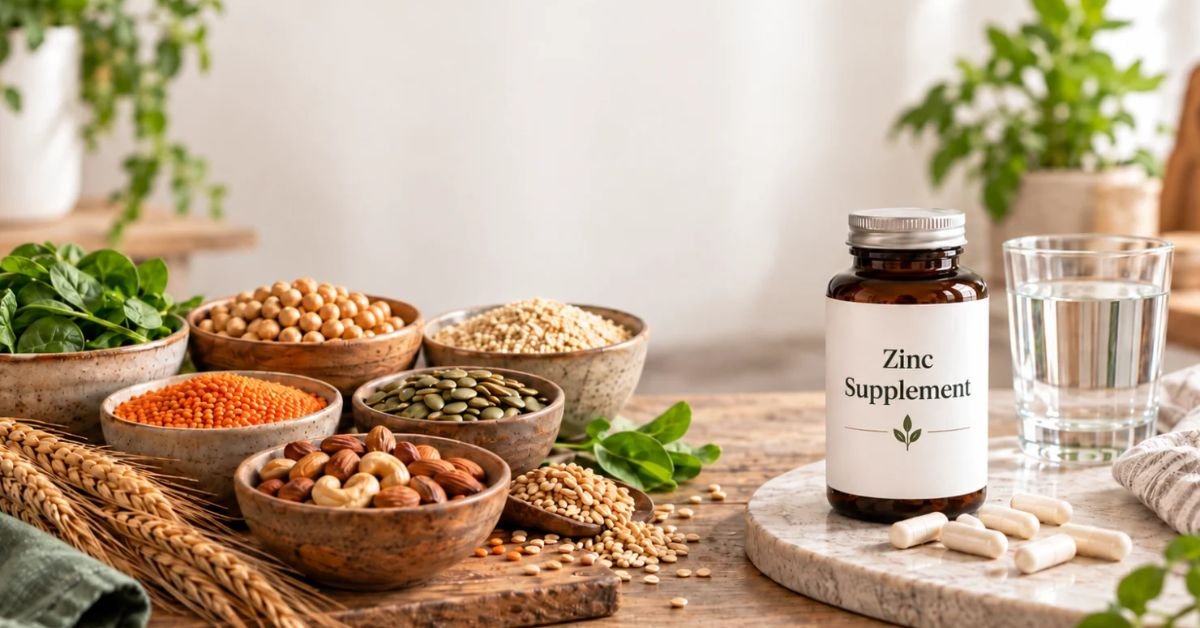
Food Sources of Zinc
Food is the preferred source of zinc for most healthy adults. A varied diet can provide zinc alongside protein, vitamins, and other minerals.
Common zinc-rich foods include:
- Oysters and shellfish: Some shellfish contain substantial amounts of zinc.
- Red meat: Beef is a useful dietary source.
- Poultry: Chicken and turkey contribute zinc.
- Fish: Certain fish and seafood provide zinc.
- Dairy products: Milk, cheese, and yogurt contribute to zinc intake.
- Eggs: Eggs provide smaller amounts of zinc.
- Legumes: Beans, chickpeas, and lentils contain zinc.
- Nuts and seeds: Pumpkin seeds, cashews, and other nuts contribute zinc.
- Whole grains: Some whole-grain foods contain zinc.
- Fortified cereals: Certain breakfast cereals provide added zinc.
Zinc from animal foods is generally more readily absorbed than zinc from many plant foods. Phytates in legumes, whole grains, nuts, and seeds can reduce zinc absorption to varying degrees.
People following vegetarian or vegan diets can still obtain zinc through careful meal planning. If dietary intake is consistently inadequate, a registered dietitian or healthcare professional can help assess whether supplementation is appropriate.
Signs of Zinc Deficiency
Zinc deficiency can occur when dietary intake is inadequate, absorption is impaired, or the body's requirements are increased.
Possible signs and symptoms include:
- Reduced appetite.
- Changes in taste or smell.
- Slow wound healing.
- Hair loss.
- Skin changes.
- Frequent infections or impaired immune function.
- Diarrhea.
- Growth problems in children.
These symptoms are not specific to zinc deficiency. For example, hair loss can be related to iron deficiency, thyroid problems, stress, or genetic factors. Changes in taste may result from medication or infection.
People with gastrointestinal disorders that affect nutrient absorption, certain chronic health conditions, or diets that provide little bioavailable zinc may have a higher risk of inadequate intake.
A healthcare professional can assess symptoms, diet, medical history, and the need for testing. Taking high-dose zinc without identifying the cause of symptoms may delay appropriate treatment.
Potential Side Effects of Zinc Supplements
Zinc supplements are generally well tolerated when used appropriately, but side effects can occur, particularly with high doses.
Common Side Effects
Possible short-term side effects include:
- Nausea.
- Vomiting.
- Stomach discomfort.
- Diarrhea.
- Reduced appetite.
- A metallic taste.
Taking zinc with food may help reduce stomach discomfort for some people, although the product label and professional advice should guide use.
Risks of Long-Term High-Dose Zinc
Excessive zinc intake can interfere with copper absorption. Over time, this may contribute to copper deficiency, anemia, reduced immune function, and neurological complications.
High doses may also affect how the body handles other nutrients. This is one reason why more zinc is not necessarily better.
If you experience persistent side effects, stop and seek advice from a healthcare professional. Do not use high-dose zinc for extended periods without a clear medical reason and appropriate monitoring.
Who May Benefit From Zinc Supplements?
Zinc supplementation may be appropriate for people whose diets do not provide enough zinc or who have a condition that increases the risk of deficiency.
Groups that may need closer nutritional assessment include:
- People with diagnosed zinc deficiency.
- Individuals with certain digestive disorders that impair nutrient absorption.
- People who have undergone some types of gastrointestinal surgery.
- Individuals following restrictive diets with limited zinc sources.
- People with medical conditions that affect nutritional status.
- Pregnant or breastfeeding individuals whose nutritional needs require professional assessment.
These groups do not automatically need a zinc supplement. Individual needs vary, and supplementation should be based on dietary intake, health circumstances, and professional guidance.
Zinc Supplements for Men and Women
Zinc is essential for both men and women, although recommended daily intake differs.
Zinc Supplements for Men
Adult men generally require 11 mg of zinc per day. Zinc contributes to normal immune function, reproductive health, protein synthesis, and cellular processes.
Men considering zinc for testosterone, muscle growth, or fertility should avoid assuming that high doses will improve these outcomes. Correcting a deficiency can be beneficial, but additional zinc has not been shown to provide the same benefits in people who already get enough.
Zinc Supplements for Women
Adult women generally require 8 mg of zinc daily, with higher recommendations during pregnancy and breastfeeding.
Zinc supports normal immune function, cell division, and skin health. Women who are pregnant or breastfeeding should discuss supplement choices with a healthcare professional to ensure that their total intake is appropriate and that products do not duplicate nutrients in prenatal or other supplements.
Can You Take Zinc With Other Supplements or Medications?
Zinc is included in many multivitamins and mineral formulas. Taking several products together can unintentionally increase total zinc intake.
Some zinc products also combine zinc with copper, selenium, biotin, vitamin D, vitamin B6, or quercetin. Review the amounts of each ingredient to avoid unnecessary duplication.
Zinc can interact with certain medications, including some antibiotics and penicillamine. It may reduce the absorption of particular antibiotics when taken too close together. The required timing depends on the medication, so ask a pharmacist or healthcare professional how to separate doses safely.
If you take prescription medication, have a chronic health condition, or are planning to use zinc regularly, seek professional advice before starting supplementation.
Must Read:
- Top 5 Best Supplements For Bloating
- Top 5 Best Turmeric And Ginger Supplements
- Best Energy Supplements For Chronic Fatigue
Final Thoughts:
Zinc supplements can help people meet their nutritional needs and support normal immune function, skin health, wound healing, and other essential body processes. Common forms include zinc picolinate, zinc gluconate, zinc citrate, and zinc sulfate, each available in different strengths and formulations.
When comparing the best zinc supplements, pay attention to elemental zinc content, additional ingredients, quality information, and your own dietary requirements. A higher dose or larger bottle does not automatically mean better value or better results.
For most adults, meeting zinc requirements through a balanced diet is the preferred approach. Supplements may be useful when dietary intake is inadequate or a deficiency has been identified, but excessive zinc can cause side effects and interfere with copper absorption. Choose a suitable product carefully and consult a healthcare professional if you are unsure about your needs or the appropriate dosage.