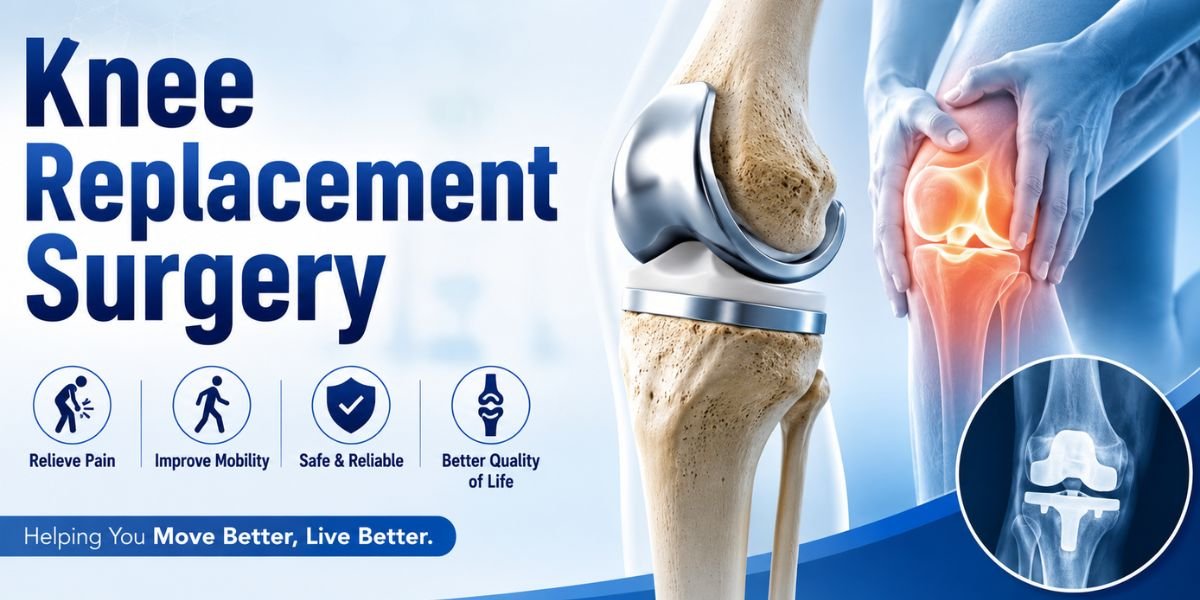
Knee Replacement Surgery is a common treatment for people with severe knee pain, arthritis, joint damage, or reduced mobility that has not improved with non-surgical treatments. The procedure replaces damaged areas of the knee joint with artificial components designed to reduce pain and improve movement.
For many patients, Knee Replacement Surgery can make everyday activities such as walking, climbing stairs and getting up from a chair easier.
Knee Replacement Surgery is a major medical procedure, so understanding the cost, preparation, surgical process, recovery timeline, physical therapy and possible risks is important before making a decision.
The total Knee Replacement Surgery cost can vary significantly depending on the type of replacement, hospital or surgical centre, insurance coverage, location and aftercare requirements.
This guide explains what to expect from Knee Replacement Surgery, including how the procedure works, how much it may cost in the USA in 2026, how long recovery can take, and what patients can do to prepare for a smoother recovery.
What Is Knee Replacement Surgery?
Knee Replacement Surgery, also called knee arthroplasty, involves removing damaged bone and cartilage from the knee and replacing those surfaces with artificial components. The artificial knee typically contains metal and medical-grade plastic parts designed to recreate the movement of a functioning joint.
Knee Replacement Surgery can involve replacing the entire knee joint or only the damaged portion. A total knee replacement resurfaces the major damaged areas of the joint, while a partial knee replacement treats damage limited to one section of the knee.
The choice between total and partial Knee Replacement Surgery depends on the extent and location of joint damage, ligament stability, overall health, activity level and other factors. An orthopaedic surgeon normally evaluates the knee using a physical examination and imaging such as X-rays before recommending surgery.
Why Is Knee Replacement Surgery Needed?
Knee Replacement Surgery is most commonly performed to relieve severe pain caused by arthritis. Osteoarthritis can gradually wear away the protective cartilage between the bones of the knee. As cartilage becomes damaged, movement can become painful and stiffness may increase.
Patients considering Knee Replacement Surgery may experience symptoms such as:
- Persistent knee pain
- Knee stiffness
- Swelling
- Difficulty walking
- Difficulty climbing stairs
- Problems standing from a chair
- Reduced range of motion
- Pain during daily activities
- Difficulty sleeping because of knee pain
- Reduced ability to exercise or participate in hobbies
Knee Replacement Surgery is generally considered when non-surgical treatments no longer provide enough relief and knee pain or reduced function significantly affects quality of life. Treatment options before surgery may include physical therapy, medication, injections, braces, activity modification and walking aids.
Types of Knee Replacement Surgery

There are several approaches to Knee Replacement Surgery, and the most appropriate option depends on the patient's condition.
Total Knee Replacement
Total Knee Replacement Surgery replaces the damaged surfaces of the knee joint. The surgeon removes damaged bone and cartilage and places artificial components on the femur and tibia. The back of the kneecap may also be resurfaced.
Total knee replacement is commonly recommended when arthritis or other joint damage affects multiple areas of the knee.
Partial Knee Replacement
Partial Knee Replacement Surgery treats damage limited to one part of the knee. Because more of the patient's natural joint is preserved, partial replacement may be appropriate for carefully selected patients.
A surgeon determines whether partial replacement is suitable based on the location of arthritis, ligament condition, knee alignment and other factors.
Robotic-Assisted Knee Replacement
Robotic-assisted Knee Replacement Surgery uses computer-based planning and specialised surgical technology to help the surgeon plan implant positioning and bone preparation. Mayo Clinic notes that robotic-assisted joint replacement can provide detailed three-dimensional planning and assist with implant sizing and positioning.
Robotic assistance does not mean that a robot independently performs the operation. The orthopaedic surgeon remains responsible for the procedure and decisions.
How Much Does Knee Replacement Surgery Cost in the USA?
Knee Replacement Surgery cost in the USA varies considerably. The final amount can depend on the hospital or ambulatory surgical centre, surgeon fees, anaesthesia, implant, imaging, medications, physical therapy, length of stay and insurance.
For 2026, published estimates for people paying without insurance commonly place total Knee Replacement Surgery costs in the tens of thousands of dollars, with some estimates ranging from approximately $30,000 to $60,000 or more depending on the setting and circumstances. These are broad self-pay estimates rather than a universal national price.
Medicare provides a different way to look at Knee Replacement Surgery cost. For the 2026 Medicare-approved amount for total knee arthroplasty, Medicare's national averages show approximately $10,552 as the total Medicare-approved amount in an ambulatory surgical centre, including a $1,159 doctor fee and $9,393 facility fee. For hospital outpatient departments, the listed Medicare-approved amount is approximately $14,275. These figures are Medicare payment amounts, not typical uninsured retail prices.
Therefore, patients should not rely on one online figure when planning Knee Replacement Surgery. The best approach is to request a personalised estimate from the hospital, surgeon and insurance provider.
What Does the Cost Include?
The total Knee Replacement Surgery cost may include:
- Orthopaedic surgeon fees
- Hospital or surgical centre fees
- Anaesthesia
- Artificial knee implant
- Pre-surgery testing
- X-rays or other imaging
- Operating room expenses
- Prescription medications
- Hospital stay
- Physical therapy
- Follow-up appointments
- Medical equipment
- Walker or other mobility aids
- Home health services when required
Some of these expenses may be billed separately.
Does Insurance Cover Knee Replacement Surgery?
Health insurance can substantially reduce the amount a patient pays for Knee Replacement Surgery. However, coverage depends on the insurance plan, deductible, coinsurance, network requirements and medical necessity rules.
Patients should contact their insurance provider before surgery and ask about:
- Surgeon coverage
- Hospital coverage
- Implant coverage
- Anaesthesia coverage
- Physical therapy
- Prescription medications
- Durable medical equipment
- Deductible
- Coinsurance
- Out-of-pocket maximum
- In-network facilities
Medicare coverage also depends on whether the procedure is performed in an inpatient or outpatient setting and on the patient's specific Medicare coverage. Medicare's 2026 procedure price information shows different approved amounts and patient costs depending on the setting.
How to Prepare for Knee Replacement Surgery

Preparing for Knee Replacement Surgery can make the recovery period easier. Your surgeon may recommend medical tests before surgery to make sure you are ready for the procedure.
Pre-surgery preparation may include blood tests, urine testing, an ECG, medical evaluation and updated imaging. Your doctor will also review your medications and may tell you which medicines or supplements need to be stopped or adjusted before surgery.
Prepare Your Home
Home preparation is particularly important if you will return home shortly after Knee Replacement Surgery.
Consider:
- Removing loose rugs
- Clearing electrical cords from walking areas
- Installing bathroom grab bars
- Preparing a shower chair
- Using a raised toilet seat if needed
- Creating a comfortable sleeping area
- Keeping frequently used items within easy reach
- Arranging transportation
- Organising help with meals and household tasks
Mayo Clinic recommends planning for mobility aids such as a walker or crutches and arranging help with everyday activities during the early recovery period.
What Happens During Knee Replacement Surgery?
Knee Replacement Surgery usually takes approximately one to two hours, although the overall time spent at the medical facility will be longer because of preparation and recovery.
Before the operation, the anaesthesia team discusses the appropriate type of anaesthesia. Depending on the patient's circumstances, general anaesthesia or regional or spinal anaesthesia may be used.
During Knee Replacement Surgery, the surgeon generally:
- Makes an incision over the knee.
- Exposes the damaged joint.
- Removes damaged bone and cartilage.
- Prepares the surfaces of the femur and tibia.
- Places the artificial components.
- Resurfaces the kneecap when appropriate.
- Checks alignment and movement.
- Closes the incision.
The replacement components are designed to restore the shape and function of the knee while allowing smoother movement.
What Happens Immediately After Surgery?
After Knee Replacement Surgery, patients are monitored while recovering from anaesthesia. Depending on health, surgical approach and recovery progress, some patients go home the same day while others remain in hospital overnight or longer.
Same-day Knee Replacement Surgery has become more common because improvements in surgical techniques, anaesthesia and pain management allow appropriately selected patients to recover safely at home. However, not everyone is a candidate for outpatient surgery.
Early movement is an important part of recovery. Patients are often encouraged to sit up, stand and walk with assistance soon after surgery. A walker, cane or crutches may be required during the early stages.
Knee Replacement Surgery Recovery Timeline
Knee Replacement Surgery recovery is different for every patient. Age, overall health, strength, surgical technique, pre-surgery mobility and commitment to rehabilitation can all influence recovery.
First Few Days
During the first few days after Knee Replacement Surgery, pain and swelling are common. Your medical team will provide instructions for pain management, wound care, walking and exercises.
Physical therapy may begin within hours of surgery. Early exercises are designed to improve circulation, restore movement and begin strengthening the muscles around the knee.
First Two Weeks
The first two weeks often focus heavily on pain control, swelling management, wound care and improving knee movement.
You may still need a walker or cane. Some patients have home physical therapy, while others attend an outpatient therapy centre.
Mayo Clinic's 2026 guidance notes that knee replacement patients commonly focus heavily on regaining range of motion during the first two weeks, with therapy playing a major role.
Three to Six Weeks
Many patients can return to a large portion of their normal daily activities within approximately three to six weeks, although recovery varies.
Driving may also become possible around this period for many patients, but you should not drive until your surgeon confirms that your knee movement, strength and reaction time are adequate.
Three Months and Beyond
By approximately three months, many patients have made significant progress in strength and mobility. However, the knee may continue improving for considerably longer.
Some sources describe full recovery as potentially taking up to a year, particularly when considering strength, flexibility and overall function.
The Importance of Physical Therapy
Physical therapy is one of the most important parts of Knee Replacement Surgery recovery.
A physical therapist can teach exercises designed to:
- Improve knee flexibility
- Increase leg strength
- Improve balance
- Restore walking ability
- Reduce stiffness
- Improve range of motion
- Help you return to daily activities
AAOS notes that most patients begin exercising the knee soon after surgery and that physical therapy helps restore movement and strength.
Following your prescribed exercise programme is important. However, patients should not force exercises beyond the instructions provided by their surgeon or physical therapist.
Pain and Swelling After Knee Replacement Surgery
Pain and swelling are normal parts of early recovery after Knee Replacement Surgery. Pain management can include prescribed medicines, ice, elevation and physical therapy.
Swelling can remain for several weeks. AAOS notes that moderate to severe swelling can occur during the first days or weeks, while milder swelling may continue for several months.
Keeping the leg elevated when instructed and using ice appropriately may help reduce swelling.
Contact your medical team if pain suddenly becomes much worse or swelling increases unexpectedly.
Risks of Knee Replacement Surgery
Knee Replacement Surgery is generally successful, but it is still major surgery and carries potential risks.
Possible complications include:
- Infection
- Blood clots
- Nerve damage
- Blood vessel injury
- Knee stiffness
- Implant loosening
- Implant wear
- Persistent pain
- Bleeding
- Cardiovascular complications
- Need for revision surgery
AAOS states that serious complications such as joint infection occur in fewer than 2% of patients following total knee replacement, although individual risk can vary.
Blood clots are another important concern. Early movement, compression devices and blood-thinning medication may be used depending on the patient's risk and surgeon's recommendations.
Warning Signs After Knee Replacement Surgery
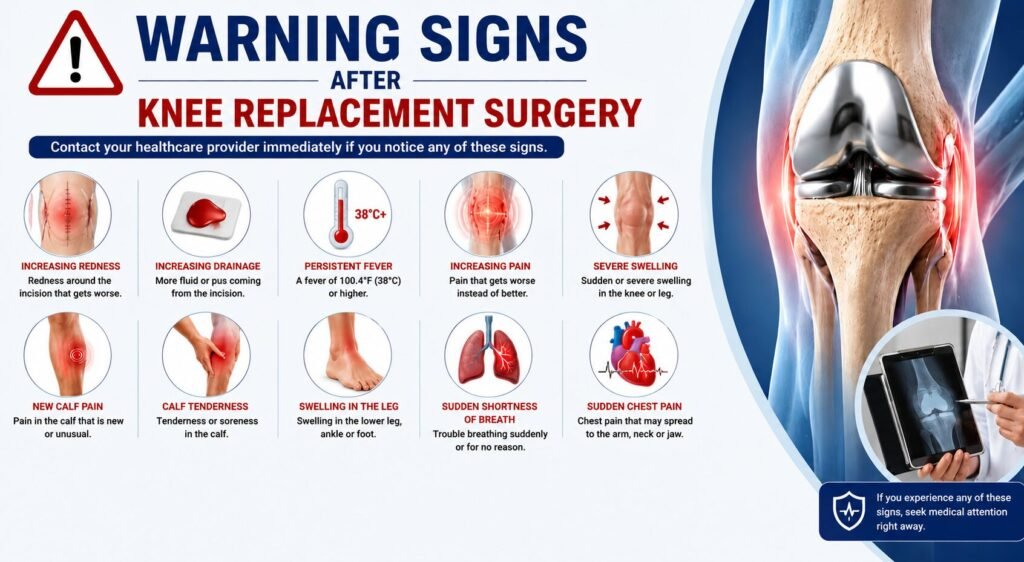
Knowing the warning signs can help you seek medical attention quickly when necessary.
Contact your healthcare provider if you notice:
- Increasing redness around the incision
- Increasing wound drainage
- Persistent fever
- Increasing knee pain
- Severe swelling
- New calf pain
- Calf tenderness
- Significant swelling in the lower leg
Sudden shortness of breath or sudden chest pain can be signs of a potentially serious blood clot that has travelled to the lungs and requires urgent medical attention.
What Activities Can You Do After Knee Replacement?
After Knee Replacement Surgery recovery, many patients can return to low-impact activities.
Commonly recommended activities may include:
- Walking
- Swimming
- Cycling
- Golf
- Light hiking
- Low-impact exercise
- Ballroom dancing
AAOS generally advises against high-impact activities such as running, jogging and jumping because excessive stress can contribute to implant wear or loosening.
Your surgeon and physical therapist can provide personalised guidance about returning to specific sports and activities.
How Long Does a Knee Replacement Last?
Modern knee replacement implants are designed to be durable. Mayo Clinic states that most knee replacements can be expected to last at least 15 to 20 years.
Implant longevity varies depending on factors such as activity level, body weight, implant design, alignment and general health.
High-impact activity can place additional stress on the artificial joint. Maintaining a healthy weight and choosing lower-impact activities may help protect the replacement over time.
When Can You Return to Work?
The timing of returning to work after Knee Replacement Surgery depends heavily on the type of job.
Someone with a desk-based job may be able to return sooner than someone whose work requires prolonged standing, walking, climbing, lifting or physical labour.
Your surgeon will consider your recovery progress, knee strength, range of motion and job requirements before recommending a return-to-work date.
Do not return to physically demanding work simply because the incision has healed. Internal healing and muscle recovery continue for much longer.
Tips for a Smoother Knee Replacement Surgery Recovery
Several practical habits can support recovery.
Follow Your Physical Therapy Programme
Perform the exercises prescribed by your physical therapist. Consistent rehabilitation helps restore strength and movement.
Use Mobility Aids Correctly
Use a walker, cane or crutches for as long as recommended. Trying to walk without support too early can increase the risk of falling.
Protect Your Incision
Follow your surgeon's wound-care instructions and avoid soaking the wound until it has properly healed.
Keep Moving Safely
Movement helps improve circulation and supports recovery, but activity should increase gradually.
Maintain a Balanced Diet
Adequate nutrition and hydration support healing. Your medical team may recommend dietary changes or supplements depending on your circumstances.
Attend Follow-Up Appointments
Follow-up visits allow your surgeon to evaluate healing, movement, implant position and overall recovery.
Knee Replacement Surgery vs Non-Surgical Treatment
Knee Replacement Surgery is not always the first treatment for knee arthritis.
Depending on the severity of symptoms, doctors may first recommend:
- Physical therapy
- Weight management
- Activity modification
- Pain medication
- Anti-inflammatory medication
- Knee braces
- Walking aids
- Corticosteroid injections
- Other injections in selected cases
Surgery may become appropriate when these treatments no longer provide adequate relief and pain significantly limits daily life.
The decision should be based on symptoms, imaging, medical history and personal goals rather than age alone.
Must Read:
- Vegan Supplements For Joint Pain
- Best Collagen Supplements For Joints
- Best Supplements for Neck Pain
FAQs:
How much does Knee Replacement Surgery cost?
Knee Replacement Surgery cost in the USA can range from tens of thousands of dollars without insurance, with some 2026 estimates placing uninsured total costs around $30,000 to $60,000 or more. Medicare-approved amounts are much different and depend on the treatment setting.
How long does Knee Replacement Surgery take?
The operation itself generally takes about one to two hours. The total time at the hospital or surgical centre will be longer because of preparation and post-operative monitoring.
How long does it take to recover from Knee Replacement Surgery?
Many patients return to most normal daily activities within about three to six weeks, but complete recovery can take several months and sometimes up to a year.
Is Knee Replacement Surgery painful?
Some pain is expected after surgery. Doctors use different pain-management strategies to help patients move and participate in physical therapy. Pain generally improves as healing progresses.
Can you walk after Knee Replacement Surgery?
Patients are generally encouraged to begin moving and walking with assistance soon after surgery. A walker, cane or crutches may be needed during the early recovery period.
Can you climb stairs after knee replacement?
Many patients learn to manage stairs before leaving the hospital or surgical facility if stairs are relevant to their home situation. A physical therapist can teach safe techniques.
Final Thoughts:
Knee Replacement Surgery can provide significant relief for people with severe knee pain and joint damage that no longer responds adequately to conservative treatment. The procedure replaces damaged joint surfaces with artificial components and aims to improve pain, mobility and quality of life.
The cost of Knee Replacement Surgery varies widely in the USA. For people without insurance, 2026 estimates can reach tens of thousands of dollars, while Medicare-approved costs are calculated differently based on the surgical setting.
The actual operation usually takes around one to two hours, but the recovery process continues for weeks and months. Physical therapy, gradual activity, proper wound care and following medical instructions are central to a successful recovery.
Most patients can eventually return to many everyday activities, particularly lower-impact exercise such as walking, swimming and cycling. Modern implants are also designed to provide long-term function, with many lasting at least 15 to 20 years.
If knee pain is affecting your ability to walk, work, sleep or enjoy everyday activities, speak with an orthopaedic surgeon about whether Knee Replacement Surgery is appropriate for you. A specialist can review your symptoms, X-rays, medical history and treatment goals and explain the potential benefits, risks, costs and alternatives.
Medical Disclaimer: This article is intended for general educational purposes only and should not replace professional medical advice, diagnosis or treatment. Knee Replacement Surgery is a major medical procedure, and individual risks, costs, recovery times and treatment recommendations vary. Speak with a qualified orthopaedic surgeon and your insurance provider for personalised medical and financial information.