-
Provides 88.5mg saffron extract per serving
-
Contains 240 vegetarian capsules per bottle
-
Gluten-free formula for daily supplementation
-
Made without genetically modified ingredients
-
Provides 88.5mg pure saffron extract
-
Contains 120 vegan capsules per bottle
-
Non-GMO and gluten-free supplement formula
-
Designed for mood, sleep, and stress support
-
Combines saffron, passionflower, magnesium, and vitamin D
-
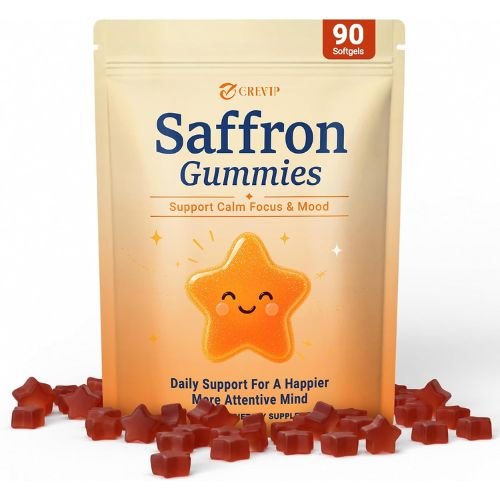
Sugar-free vegan gummies for children
-
Supports calm, focus, and sleep
-
Contains 90 gluten-free chewable gummies
-
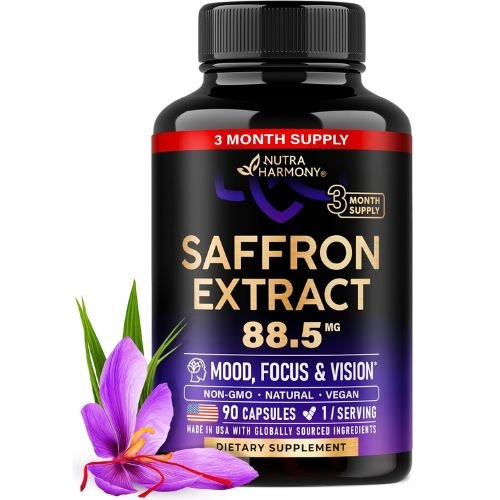
Provides 88.5mg saffron extract per serving
-
Contains 90 vegan capsules per bottle
-
Supports mood and eye health
-
Lab-tested, non-GMO supplement formula
-
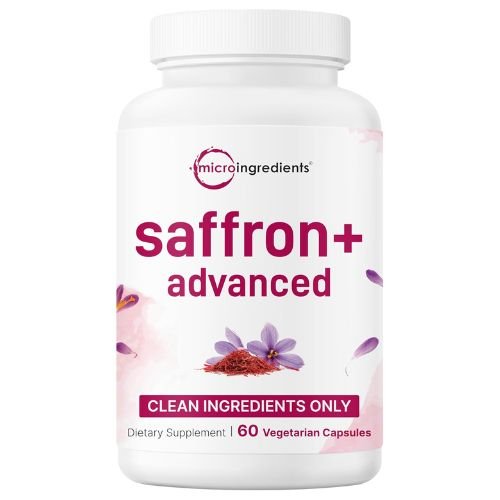
Contains ten complementary wellness ingredients
-
Combines saffron, magnesium, and turmeric
-
Includes KSM-66 ashwagandha and vitamin C
-
Non-GMO vegetarian capsules without fillers
Top 5 Best Saffron Supplements
The best saffron supplements offer a convenient way to add saffron extract to your daily wellness routine. Available in capsules and gummies, these products vary in strength, ingredients, and formulation. Compare extract amounts, quality testing, and additional nutrients to choose a supplement that suits your preferences and individual nutritional needs.
1. Nutricost
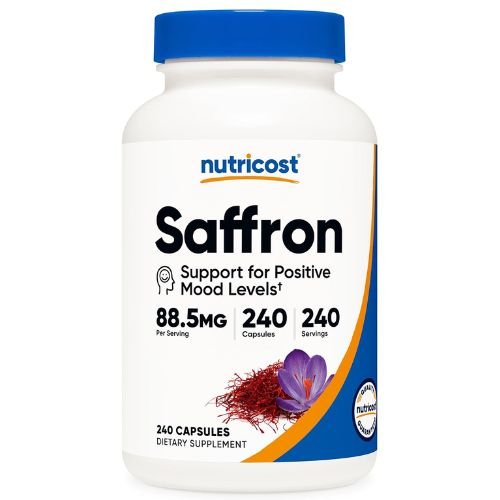
Nutricost Saffron Extract provides 88.5 mg of saffron extract per serving in convenient vegetarian capsules. The bottle contains 240 capsules and is marketed as gluten-free and GMO-free. It may appeal to adults looking for a straightforward saffron supplement. Review the serving instructions and ingredient details before adding it to your routine.
Nutricost Saffron Extract provides 88.5 mg of saffron extract per serving in a convenient vegetarian capsule. The bottle contains 240 capsules, offering 240 servings when taken as directed. Its formula is marketed as vegetarian, gluten-free, soy-free, and GMO-free, making it an option for adults comparing saffron supplements for daily wellness.
Key Benefits
- Provides 88.5mg saffron extract per serving
- Contains 240 vegetarian capsules per bottle
- Gluten-free, soy-free, and GMO-free formula
- Offers 240 servings when taken as directed
- Manufactured in an NSF-certified, GMP-compliant facility, according to the listing
Product Overview
| Feature | Details |
|---|---|
| Brand | Nutricost |
| Supplement Type | Saffron extract |
| Item Form | Capsule |
| Strength | 88.5 mg per serving |
| Quantity | 240 capsules |
| Servings | 240, according to the listing |
| Dietary Features | Vegetarian, gluten-free, soy-free, GMO-free |
| Manufacturing Information | NSF-certified, GMP-compliant, FDA-registered facility, according to the manufacturer |
Why Choose Nutricost Saffron Extract?
Nutricost offers a straightforward saffron supplement with a clearly stated serving amount and a large bottle size. The vegetarian capsules and listed dietary features may suit adults who prefer a simple formula. Saffron is being studied for potential effects on mood and other aspects of well-being, but results vary and are not guaranteed.
Safety Note
Saffron supplements may cause side effects and can interact with certain medications. Consult a healthcare professional before use if you take prescription medication, have an ongoing health condition, or are pregnant or breastfeeding. Follow the product label and avoid assuming that a higher dose will provide greater benefits.
2. NutriRise
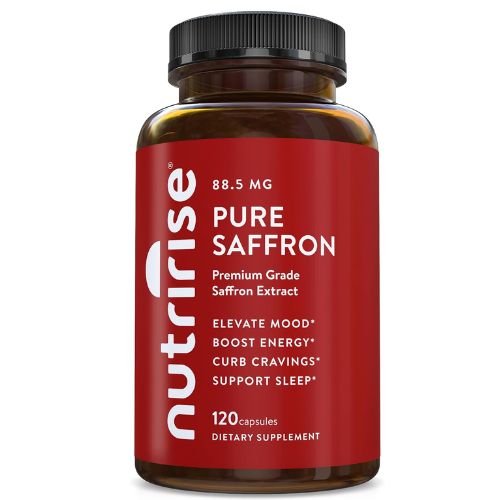
NutriRise Saffron Supplements contain 88.5 mg of pure saffron extract, according to the product listing. The bottle includes 120 vegan capsules and is marketed as non-GMO and gluten-free. The product is promoted for mood, energy, sleep, and stress support. Individual results may vary, so check the label before use.
NutriRise Saffron Supplements provide 88.5 mg of saffron extract per serving in a convenient capsule format. The formula is marketed for mood, stress, sleep, and appetite support. Each bottle contains 120 vegan capsules and is described as non-GMO and gluten-free. The manufacturer also reports third-party testing and GMP-certified production.
Key Benefits
- Provides 88.5mg saffron extract per serving
- Contains 120 vegan capsules per bottle
- Non-GMO and gluten-free formula
- Marketed for mood and stress support
- Third-party tested, according to the manufacturer
Product Overview
| Feature | Details |
|---|---|
| Brand | NutriRise |
| Supplement Type | Saffron extract |
| Item Form | Capsule |
| Strength | 88.5 mg per serving |
| Quantity | 120 capsules |
| Servings | 120, according to the listing |
| Dietary Features | Vegan, non-GMO, gluten-free |
| Additional Ingredients | Saffron-only extract, according to the listing |
| Quality Information | Third-party testing and GMP-certified production reported by the manufacturer |
| Intended Uses | Mood, stress, sleep, and appetite support |
Why Choose NutriRise Saffron Supplements?
NutriRise offers a single-ingredient saffron supplement for adults who prefer a capsule rather than a multi-ingredient formula. Its stated extract amount and dietary features make it easy to compare with other saffron products. Research into saffron for mood and appetite is still developing, so advertised results and timelines should not be treated as guaranteed.
Safety Note
Saffron supplements may cause side effects and could interact with certain medications. Consult a healthcare professional before use if you take prescription medication, have a medical condition, or are pregnant or breastfeeding. Follow the product label, and do not use saffron supplements as a replacement for treatment for mood, sleep, or other health concerns.
3. GREVIP
GREVIP Saffron Gummies are designed for children and combine saffron with passionflower extract, magnesium, and vitamin D. The sugar-free, vegan formula contains 90 gluten-free chewable gummies. The product is marketed for calmness, focus, and sleep support. Parents should review ingredient amounts and consult a pediatric healthcare professional before giving supplements to children.
GREVIP Saffron Gummies for Kids are chewable wellness supplements formulated with saffron, passionflower, chamomile, magnesium, and vitamin D. The sugar-free gummies come in a fruit flavor and are marketed to support calmness, focus, relaxation, and emotional wellness. The formula is described as vegan, gluten-free, and free from melatonin.
Key Benefits
- Combines saffron with calming botanical ingredients
- Sugar-free gummies with fruit flavor
- Contains magnesium and vitamin D
- Melatonin-free formula, according to the listing
- Convenient chewable format for children
Product Overview
| Feature | Details |
|---|---|
| Brand | GREVIP |
| Supplement Type | Children's wellness supplement |
| Item Form | Gummy |
| Quantity | 90 gummies |
| Flavor | Fruit, described as raspberry |
| Key Ingredients | Saffron, passionflower, chamomile, magnesium, vitamin D |
| Dietary Features | Sugar-free, vegan, gluten-free, according to the listing |
| Melatonin | Marketed as melatonin-free |
| Intended Use | Marketed for mood, calmness, focus, and relaxation |
Why Choose GREVIP Saffron Gummies for Kids?
GREVIP offers a chewable alternative to capsules, with a blend of saffron and other ingredients commonly included in relaxation and wellness products. Its sugar-free format may appeal to families looking for an alternative to traditional gummy supplements. However, claims about improving mood, focus, or sleep should not be treated as guaranteed results, and evidence for these effects in children may be limited.
Safety Note
Because this product is intended for children, consult a pediatrician or qualified healthcare professional before giving it to a child. Check the complete ingredient list and age-specific dosage instructions, especially for magnesium and botanical extracts. Supplements can cause side effects or interact with medicines. Keep the product out of reach of young children, and do not use it to replace professional evaluation for ongoing mood, attention, or sleep concerns.
4. NUTRAHARMONY
NUTRAHARMONY Saffron Supplements provide 88.5 mg of saffron extract in a capsule formula, according to the product details. The bottle contains 90 vegan capsules and is marketed as non-GMO and laboratory tested. It is promoted for mood and vision support. Check the serving size and available quality information before purchasing.
NUTRAHARMONY Saffron Extract provides 88.5 mg of saffron per serving in a convenient capsule format. Made from Crocus sativus flowers, this supplement is marketed for mood, energy, focus, sleep, and vision support. The formula is described as vegan, non-GMO, and third-party lab-tested, with 90 capsules per bottle.
Key Benefits
- Provides 88.5 mg saffron extract per serving
- Contains 90 convenient daily capsules
- Marketed for mood and energy support
- Contains naturally occurring antioxidant compounds
- Vegan and non-GMO, according to the listing
- Third-party lab-tested, according to the manufacturer
Product Overview
| Feature | Details |
|---|---|
| Brand | NUTRAHARMONY |
| Supplement Type | Saffron extract |
| Item Form | Capsule |
| Strength | 88.5 mg per serving |
| Quantity | 90 capsules |
| Package Type | Bottle |
| Key Ingredient | Saffron (Crocus sativus) |
| Dietary Features | Vegan, non-GMO, according to the listing |
| Quality Information | Third-party lab-tested, according to the manufacturer |
| Manufacturing Information | Made in the USA with globally sourced ingredients, according to the listing |
| Intended Uses | Mood, energy, focus, sleep, and vision support |
Why Choose NUTRAHARMONY Saffron Extract?
NUTRAHARMONY may appeal to adults looking for a straightforward saffron supplement without a complex blend of additional ingredients. Its 88.5 mg serving and 90-capsule bottle make it convenient to compare with other saffron products. Saffron contains antioxidant compounds, and research into its potential effects on mood and eye health is ongoing. However, the advertised benefits are not guaranteed, and this supplement should not be considered a treatment for vision or mental health conditions.
Safety Note
Saffron supplements may cause side effects or interact with medications. Consult a healthcare professional before use if you take medication, have an existing medical condition, or are pregnant or breastfeeding. Follow the label's serving instructions, and seek professional advice before using saffron supplements to address persistent mood, sleep, energy, or vision concerns.
5. Micro Ingredients
Micro Ingredients Saffron+ Advanced Supplements combine saffron extract with magnesium glycinate, turmeric curcumin, KSM-66 ashwagandha, and vitamin C. The 10-in-1 formula contains 60 vegetarian capsules and is marketed as non-GMO and filler-free. Its multiple ingredients may appeal to adults seeking a combination supplement. Review the full label for ingredient amounts and potential interactions.
Micro Ingredients Saffron+ Advanced is a multi-ingredient supplement that combines saffron extract with magnesium glycinate, turmeric curcumin, KSM-66 ashwagandha, vitamin C, L-theanine, rhodiola rosea, and other ingredients. The formula is designed for adults seeking a combination supplement for everyday wellness. According to the product listing, it is non-GMO, vegetarian, filler-free, and third-party lab-tested.
Key Benefits
- Combines saffron with multiple wellness ingredients
- Includes magnesium glycinate and vitamin C
- Contains turmeric extract and KSM-66 ashwagandha
- Provides 60 vegetarian capsules per bottle
- Non-GMO and filler-free, according to the listing
- Third-party tested, according to the manufacturer
Product Overview
| Feature | Details |
|---|---|
| Brand | Micro Ingredients |
| Supplement Type | Saffron+ multi-ingredient complex |
| Item Form | Vegetarian capsule |
| Quantity | 60 capsules |
| Supply Duration | 30 days, according to the listing |
| Key Ingredients | Saffron extract, magnesium glycinate, turmeric extract, KSM-66 ashwagandha, vitamin C, L-theanine, rhodiola rosea, black pepper |
| Dietary Features | Non-GMO, vegetarian, filler-free |
| Allergen Information | Listed as free from soy, dairy, gluten, wheat, and tree nuts |
| Quality Information | Third-party lab-tested, according to the manufacturer |
| Manufacturing Standards | cGMP-compliant facility, according to the listing |
Why Choose Micro Ingredients Saffron+ Advanced?
This supplement may suit adults who prefer a multi-ingredient formula instead of taking several individual supplements. It combines saffron with herbs, an amino acid, a mineral, and vitamin C in one capsule product. The blend may be convenient for comparing different wellness ingredients, but having multiple ingredients does not automatically mean better results. The effects depend on the amounts included, individual needs, and the available scientific evidence.
Safety Note
Multi-ingredient supplements can increase the risk of interactions with medications or other supplements. Ashwagandha, turmeric, rhodiola, and saffron may not be suitable for everyone. Consult a healthcare professional before use, especially if you take medication, have a medical condition, or are pregnant or breastfeeding. Review the full Supplement Facts panel for individual ingredient amounts, follow the label directions, and discontinue use if you experience an adverse reaction.
Saffron supplements have become increasingly popular among people looking for natural ways to support mood, emotional wellness, relaxation, and overall health. Made from saffron, a spice obtained from the flower of Crocus sativus, these supplements contain naturally occurring compounds that researchers are studying for their potential health benefits. Saffron is traditionally valued for its distinctive color, flavor, and long history of use in food and wellness practices.
Today, saffron supplements are available in several forms, including capsules, tablets, gummies, and combination formulas. Some products contain saffron extract alone, while others combine it with ingredients such as magnesium, turmeric, ashwagandha, or vitamin C. These options can make choosing a supplement confusing, particularly when products advertise benefits for mood, sleep, energy, appetite, and eye health.
Understanding saffron's potential benefits, scientific limitations, safety considerations, and supplement quality can help you make a more informed decision. This guide explains what saffron supplements are, how they may work, what to look for when buying them, and how to use them responsibly.
What Are Saffron Supplements?
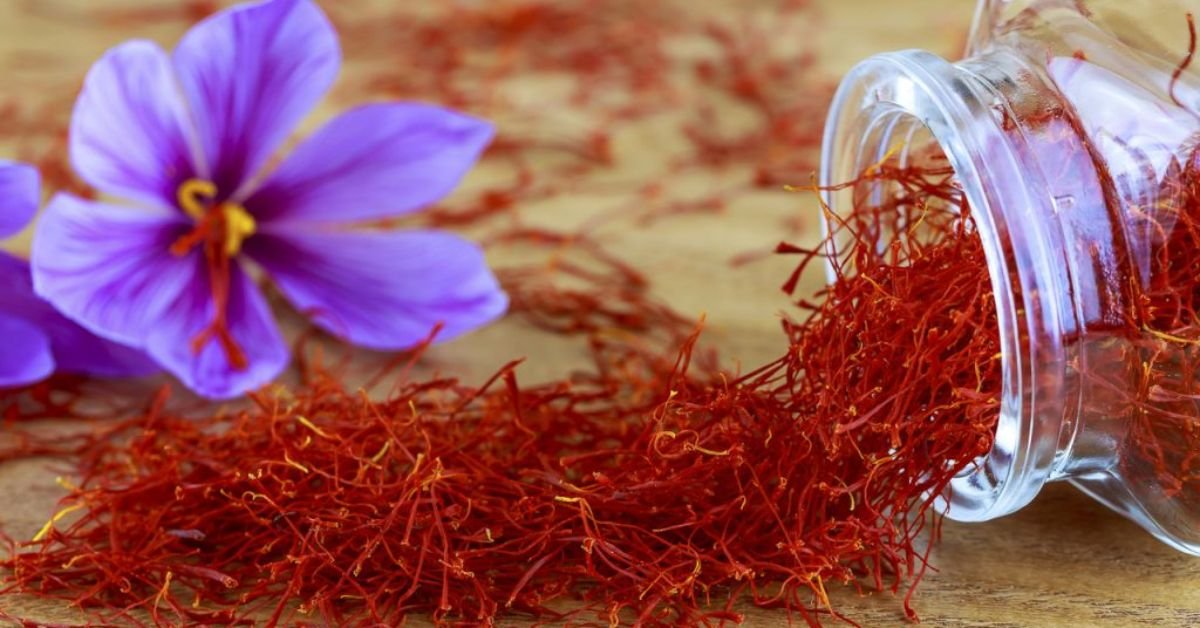
Saffron supplements are dietary products made using saffron or concentrated saffron extract. Saffron comes from the red stigmas of the Crocus sativus flower. Each flower produces only a small amount of saffron, making the spice labor-intensive to harvest and relatively expensive.
Saffron contains several naturally occurring compounds, including crocin, crocetin, and safranal. These compounds contribute to saffron's color, aroma, and biological properties. Researchers are investigating whether they may influence processes associated with mood, oxidative stress, and other aspects of health.
Unlike culinary saffron, which is generally used in small quantities to flavor food, supplements provide a measured amount of saffron or its extract in each serving.
Common Types of Saffron Supplements
Saffron supplements are available in different formats to accommodate various preferences.
- Saffron capsules: These are convenient options for adults who prefer a measured serving without a strong flavor.
- Saffron extract supplements: These products contain saffron extract and may specify the extract amount per serving.
- Saffron gummies: Chewable products may appeal to people who dislike swallowing capsules. Some are marketed for children, but pediatric use requires particular caution.
- Combination supplements: These contain saffron alongside ingredients such as magnesium, turmeric, L-theanine, or ashwagandha.
- Single-ingredient formulas: These focus primarily on saffron, making it easier to identify the main ingredient and compare products.
The best format depends on personal preferences, the product's ingredient profile, and individual health needs. A supplement's format alone does not establish its effectiveness.
Potential Benefits of Saffron Supplements
Saffron has attracted scientific interest because of its naturally occurring compounds. Some early clinical studies suggest possible benefits in specific areas, but the strength of the evidence varies. Results from small studies should not be interpreted as proof that every saffron supplement will produce the same effects.
1. May Support Mood and Emotional Wellness
Mood support is one of the most frequently advertised uses of saffron supplements. Researchers have investigated saffron for its potential effects on depressive symptoms and emotional well-being.
Some clinical trials have reported improvements in mood-related symptoms among certain adults taking saffron preparations. However, many studies have involved relatively small groups, short treatment periods, and specific standardized extracts. More research is needed to establish how consistently these findings apply to different populations and commercial products.
Saffron supplements should not be considered a guaranteed solution for sadness, anxiety, or emotional distress. People experiencing persistent symptoms should seek advice from a qualified healthcare professional rather than relying on supplements alone.
2. May Help Support Relaxation
Some saffron products are marketed for relaxation and stress management. Researchers are exploring whether saffron compounds influence biological pathways associated with the nervous system and emotional responses.
Although preliminary findings are interesting, evidence that saffron supplements reliably reduce everyday stress remains limited. Individual responses may vary depending on the formulation, serving amount, and personal circumstances.
Healthy routines can also contribute to relaxation. Consistent sleep, regular physical activity, balanced meals, and appropriate stress-management techniques remain important parts of overall wellness.
3. May Support Healthy Sleep
Sleep support is another common marketing claim associated with saffron supplements. Some research has examined saffron preparations in adults reporting sleep difficulties, with early findings suggesting possible improvements in certain sleep-related measures.
However, saffron is not an established treatment for insomnia, and evidence is not sufficient to guarantee better sleep. Combination supplements may contain additional ingredients marketed for relaxation, making it important to consider the complete formula rather than attributing every possible effect to saffron.
People with persistent sleep problems, loud snoring, daytime exhaustion, or ongoing difficulty falling asleep should consult a healthcare professional to identify possible underlying causes.
4. Contains Antioxidant Compounds
Saffron contains compounds such as crocin and crocetin that have demonstrated antioxidant activity in laboratory research. Antioxidants are substances that can help neutralize certain reactive molecules under specific conditions.
Oxidative stress is studied in connection with normal aging and various biological processes. Nevertheless, laboratory findings do not automatically translate into measurable health benefits from taking a supplement.
A balanced diet containing fruits, vegetables, legumes, nuts, and whole grains provides a broad range of nutrients and naturally occurring plant compounds. Saffron supplements should complement healthy dietary habits rather than replace them.
5. May Support Eye Health
Saffron is also being investigated for its possible effects on retinal function and visual health. Some human studies have examined saffron preparations in people with specific eye conditions, including age-related macular degeneration.
These findings are preliminary and relate to particular study populations and preparations. They do not mean that an ordinary saffron supplement can prevent vision loss or treat an eye disease.
Anyone experiencing blurred vision, sudden changes in eyesight, eye pain, or other concerning symptoms should seek appropriate medical care. People with existing eye conditions should discuss supplements with their eye-care professional before use.
6. May Influence Appetite and Cravings
Some saffron supplements are marketed for appetite control, cravings, and weight-management support. A limited number of studies have investigated saffron extracts in relation to snacking behavior and appetite-related outcomes.
The available evidence is not strong enough to conclude that saffron consistently reduces appetite or causes meaningful weight loss. Product advertisements that promise rapid results or specific percentages of reduced cravings should be viewed cautiously unless supported by reliable, relevant clinical evidence.
Sustainable weight management generally depends on eating patterns, physical activity, sleep, and other individual factors. Supplements cannot replace these foundations.
7. May Support General Wellness
Saffron is a botanical ingredient with a long culinary and traditional history. Its naturally occurring compounds make it an interesting subject for ongoing scientific research.
However, general wellness is a broad term rather than a specific medical outcome. A product marketed for energy, focus, mood, sleep, and vision should not automatically be assumed to provide all these benefits.
When evaluating a supplement, focus on the actual ingredients, serving information, quality testing, and evidence relevant to the intended use.
How Do Saffron Supplements Work?
Saffron contains several compounds that scientists are studying for their potential biological activity.
Crocin and crocetin: These compounds contribute to saffron's color and have been investigated for antioxidant and other biological effects.
Safranal: This aromatic compound contributes to saffron's characteristic smell and has been studied in laboratory research.
Researchers are also exploring possible interactions between saffron compounds and pathways involved in neurotransmission, inflammation, and oxidative stress. Some proposed mechanisms may help explain findings from early studies, but many questions remain unanswered.
Importantly, saffron supplements are not identical. Extracting methods, ingredient concentrations, standardization, and additional ingredients can vary between products. Evidence from one specific extract cannot automatically be applied to every capsule or gummy on the market.
Saffron Extract vs. Whole Saffron
Both culinary saffron and saffron extract originate from the same plant, but they are used differently.
| Feature | Culinary Saffron | Saffron Extract Supplement |
|---|---|---|
| Main purpose | Flavoring and coloring food | Providing a measured supplement serving |
| Typical format | Threads or powder | Capsules, tablets, or gummies |
| Serving measurement | Usually used in small culinary quantities | Listed as a measured amount per serving |
| Ingredient concentration | Depends on the food preparation | Depends on the extraction and manufacturing process |
| Research comparison | Often studied as a food or botanical | Some clinical studies use specific standardized extracts |
Neither form is automatically better for every purpose. Culinary saffron can be part of a varied diet, while supplements may be convenient for people interested in a measured amount of extract. The amount stated on a label does not, by itself, establish the concentration of active compounds or clinical effectiveness.
How to Choose the Best Saffron Supplements
Choosing a quality saffron supplement requires more than comparing product names or advertised benefits. Use the following factors to assess available options.
1. Check the Saffron Extract Amount
Look at the Supplement Facts panel to identify the amount of saffron extract per serving. Some products advertise amounts such as 88.5 mg, but this figure alone does not establish that one supplement is more effective than another.
Pay attention to the recommended serving size. A label may list the amount per capsule, per serving, or per multiple capsules, so read the details carefully.
2. Review the Ingredient List
Some supplements contain saffron as their primary ingredient, while combination products include several additional compounds.
Single-ingredient formulas may be easier to evaluate if you want to understand how you respond to saffron specifically. Combination products can be convenient, but they may introduce additional safety considerations and make it harder to identify which ingredient causes a side effect.
Check for unnecessary ingredients, allergens, and any components that may conflict with your dietary requirements.
3. Look for Independent Quality Testing
Third-party testing can provide additional information about a supplement's identity, purity, and quality. Look for transparent details about the testing organization and the scope of the tests.
Terms such as “lab-tested,” “GMP-compliant,” or “made in the USA” do not independently prove that a supplement is effective. Good manufacturing practices concern production and quality systems, not guaranteed health outcomes.
Where possible, choose brands that provide clear labeling and credible quality documentation.
4. Consider Dietary Preferences
Saffron supplements may be labeled vegan, vegetarian, gluten-free, dairy-free, or non-GMO. These details can help shoppers compare products, but claims should be checked against the full ingredient list and relevant certifications where applicable.
For capsules, check whether the capsule shell contains gelatin or plant-derived material. For gummies, review sweeteners, sugar content, and other ingredients.
5. Compare Single-Ingredient and Combination Formulas
A single-ingredient saffron supplement may be suitable for people who want a simpler formula. Combination products may contain saffron alongside magnesium glycinate, turmeric, ashwagandha, L-theanine, or vitamin C.
More ingredients do not necessarily mean greater effectiveness. Each additional ingredient has its own evidence, possible side effects, and potential interactions. Compare the amount of each ingredient rather than relying on phrases such as “advanced complex” or “10-in-1 formula.”
6. Avoid Unrealistic Marketing Claims
Be cautious with products that promise instant mood changes, guaranteed sleep improvements, dramatic appetite suppression, or rapid weight loss.
Health benefits depend on multiple factors, and supplements can affect people differently. Look for clear labeling and reasonable claims rather than relying on testimonials or unsupported percentages.
7. Review the Cost Per Serving
Bottle size can make one product appear less expensive than another, but the total capsule count is not the only factor to consider.
Compare the price per labeled serving, serving instructions, ingredient amounts, and quality information. A larger bottle may offer more servings, but it is not automatically a better-value purchase.
Popular Types of Saffron Supplements to Compare
Different products suit different preferences. The following examples illustrate the types of saffron supplements available and the features worth reviewing.
Saffron Extract Capsules
Single-ingredient products, such as Nutricost Saffron Extract and NUTRAHARMONY Saffron Extract, are examples of capsule-based supplements centered on saffron.
These formulas may appeal to adults who prefer a straightforward ingredient list. When comparing them, review the extract amount, number of capsules, serving directions, and quality-testing information.
Saffron Supplements for Everyday Wellness
NutriRise Saffron Supplements are marketed for mood, stress, sleep, and appetite support. Such products may appeal to people seeking a saffron-focused formula, but advertised outcomes and timelines should not be treated as guaranteed.
Review the Supplement Facts panel and check whether the listed serving size matches the amount described in the product's marketing materials.
Saffron Gummies for Children
GREVIP Saffron Gummies for Kids are marketed as chewable supplements containing saffron and other ingredients, including botanical extracts and nutrients.
Products intended for children require special care. Ingredients that are tolerated by adults may not be suitable for every child, and evidence supporting supplement use in children may be limited. Parents should consult a pediatrician before giving a child a saffron supplement, particularly one containing multiple active ingredients.
Multi-Ingredient Saffron Supplements
Micro Ingredients Saffron+ Advanced is an example of a combination formula containing saffron alongside ingredients such as magnesium glycinate, turmeric extract, ashwagandha, and L-theanine.
Combination formulas may offer convenience, but users should examine the amounts of individual ingredients and potential interactions. A multi-ingredient product is not necessarily more effective than a simpler formula.
These examples are product categories to compare, not a ranking of proven effectiveness. Product quality, ingredient quantities, and personal suitability should guide the final decision.
Recommended Use and Serving Considerations
There is no single saffron supplement serving amount that is appropriate for everyone. The amount used in research varies depending on the specific preparation, intended outcome, and study design.
Always read the manufacturer's instructions and avoid taking more than the labeled serving. Do not assume that two products with the same advertised milligram amount are equivalent, because extract composition and standardization may differ.
If you are taking saffron for a particular health concern, discuss the product and its intended use with a qualified healthcare professional. This is especially important if you already use medication or other supplements.
Consistency alone does not guarantee a benefit. If you experience side effects or notice that the supplement is not suitable for you, stop using it and seek professional advice when appropriate.
Possible Side Effects of Saffron Supplements
Saffron supplements may cause side effects, although the likelihood can depend on the amount consumed, the specific preparation, and individual sensitivity.
Possible effects may include:
- Nausea or digestive discomfort
- Headache
- Dizziness
- Allergic reactions in susceptible individuals
- Other unexpected symptoms, particularly when taking high amounts or multi-ingredient formulas
The safety of concentrated saffron supplements has not been established for every population or long-term use scenario. Taking more than the recommended amount may increase the risk of adverse effects.
Seek medical advice if symptoms persist or worsen. Get urgent medical attention for severe allergic symptoms, such as difficulty breathing or swelling of the throat.
Who Should Avoid Saffron Supplements or Seek Medical Advice?
Although saffron is used as a culinary spice, concentrated supplements deserve additional consideration.
Pregnant or breastfeeding individuals: Consult a healthcare professional before using saffron supplements. Concentrated preparations may present different safety considerations from normal culinary use, and safety data can be limited.
People taking prescription medications: Saffron may interact with some medicines. Seek advice from a pharmacist or healthcare professional before combining it with prescription drugs or other supplements.
People with existing medical conditions: Discuss saffron supplementation with a qualified professional, particularly if you are receiving treatment for a mood disorder, a sleep problem, or an eye condition.
Children and teenagers: Do not assume that adult saffron products are appropriate for younger people. Consult a pediatric healthcare professional before use, especially with combination gummies or formulas containing several active ingredients.
People preparing for surgery: Tell your healthcare team about all supplements you use and ask whether any should be stopped before a procedure.
Saffron supplements should not replace prescribed medication, professional treatment, or recommended medical monitoring.
Must Read:
- Top 5 Best Garlic Supplements
- Buy Ashwagandha Supplements Online at Best Prices
- Buy Zinc Supplements Online at Best Price
Final Thoughts:
Saffron supplements offer a convenient way to consume a measured amount of saffron extract, and early research suggests possible benefits in selected areas, especially mood-related wellness. Researchers are also studying saffron's antioxidant compounds and its potential relationship with sleep, appetite, and eye health.
However, evidence remains limited for many advertised uses, and supplement formulations can differ substantially. Choosing a product with transparent labeling, appropriate quality testing, and a clearly stated serving amount is more useful than relying on bold marketing promises.
Before adding saffron supplements to your routine, consider your health needs, current medications, and dietary preferences. Consult a qualified healthcare professional if you have concerns or intend to use saffron for a specific medical issue. A thoughtful approach can help you evaluate saffron supplements realistically while keeping safety and overall wellness at the center of your decision.